Invention and Engineering
Flue-gas stack
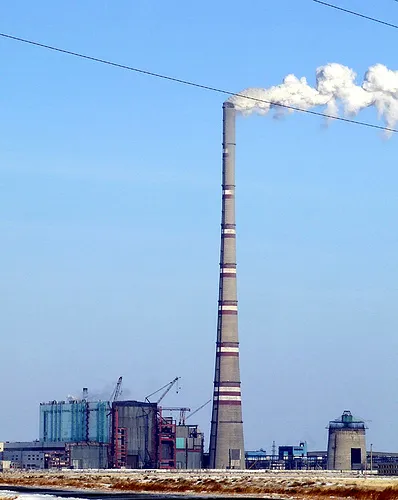
A flue-gas stack, also known as a smoke stack, Coal Stack, chimney stack or simply as a stack, is a type of chimney, a vertical pipe, channel or similar structure through which flue gases are exhausted to the outside air. Flue gases are produced when coal, oil, natural gas, wood or any other fuel is combusted in an industrial furnace, a power plant's steam-generating boiler, or other large combustion device. Flue gases can also be produced from chemical or physical processes that do not involve combustion, such as natural gas processing. Flue gas from combustion is usually composed of carbon dioxide (CO2) and water vapor, as well as nitrogen and excess oxygen remaining from the intake combustion air. It also contains a small percentage of pollutants such as particulate matter, carbon monoxide, nitrogen oxides and sulfur oxides. The flue gas stacks are often quite tall, up to 420 metres (1,380 ft), to increase the stack effect and dispersion of pollutants. When the flue gases are exhausted from stoves, ovens, fireplaces, heating furnaces and boilers, or other small sources within residential abodes, restaurants, hotels, or other public buildings and small commercial enterprises, their flue gas stacks are referred to as chimneys.
Also on this shelf
GWR 4900 Class 4930 Hagley Hall.
2-3-2K.
See also
Uncatalogued shelfText from Wikipedia; plate via Wikimedia Commons. Text CC BY-SA 4.0; plate freely licensed (see Commons). Source record. Images and catalogue data are reproduced from open-access collections.