Invention and Engineering
Indian maritime history
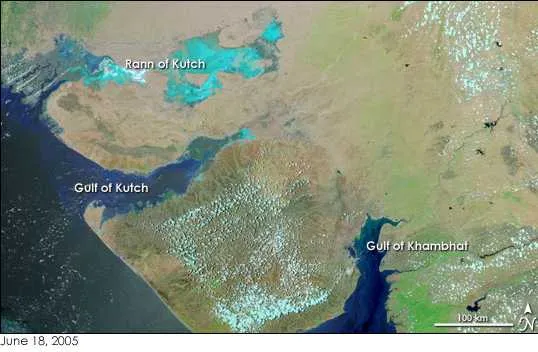
Indian maritime history begins during the 3rd millennium BCE, when the Indus Valley Civilisation initiated maritime trading contact with Mesopotamia. India's long coastline, with the Deccan Peninsula projecting into the Indian Ocean, helped foster extensive maritime trade and cultural exchange. The Indian Ocean is named after India due to its prominent geographic position in the region. As per Vedic records, Indian traders and merchants traded with the Far East and Arabia. During the Maurya Empire (c. 320–185 BCE), there was a definite "naval department" to supervise the ships and trade.At the end of 1st century BCE, Indian products reached the Romans during the rule of Augustus, and the Roman historian Strabo mentions an increase in Roman trade with India following the Roman annexation of Egypt. As trade between India and the Greco-Roman world increased, spices became the main import from India to the Western world, bypassing silk and other commodities. Indians were present in Alexandria, while Christian and Jewish settlers from Rome continued to live in India long after the fall of the Roman Empire, which resulted in Rome's loss of the Red Sea ports, previously used to secure trade with India by the Greco-Roman world since the Ptolemaic dynasty. The Indian commercial connection with Southeast Asia proved vital to the merchants of Arabia and Persia during the 7th–8th century. A study published in 2013 found that some 11 percent of Australian Aboriginal DNA is of Indian origin and suggests these immigrants arrived about 4,000 years ago, possibly at the same time dingoes first arrived in Australia. On orders of Manuel I of Portugal, four vessels under the command of navigator Vasco da Gama rounded the Cape of Good Hope, continuing to the eastern coast of Africa to Malindi to sail across the Indian Ocean to Calicut by 1498. This discovery of the Cape Route meant that the wealth of the Indies was now open for the Europeans to explore. The Portuguese Empire was the first European empire to grow from spice trade. By 1869, the completion of the Suez Canal resulted in a faster maritime route between Europe and India, allowing the United Kingdom to more easily maintain control in India and the Indian Ocean.
Also on this shelf
1775.
Excimer laser.
See also
Uncatalogued shelfText from Wikipedia; plate via Wikimedia Commons. Text CC BY-SA 4.0; plate freely licensed (see Commons). Source record. Images and catalogue data are reproduced from open-access collections.