Invention and Engineering
Industrialization in the Soviet Union
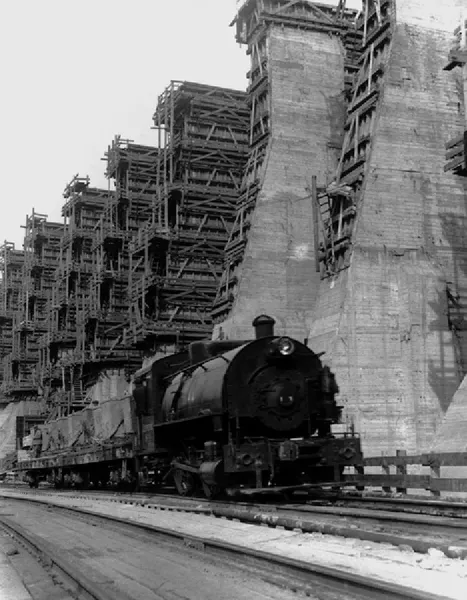
Industrialization in the Soviet Union was the process of the accelerated creation of large–scale machine industry and the transformation of the predominantly agrarian economy of the Soviet Union into an industrial one, carried out from the late 1920s to June 1941 through the system of Five–Year Plans and associated with the construction of a planned economy. In historiography, industrialization is generally distinguished from ordinary economic growth because it involved a deliberate restructuring of production through the transfer of labor, capital, and resources from agriculture to industry, from the countryside to urban centers, and from consumer production to the production of means of production. Most historians regard industrialization as the decisive transformative event in Soviet history, fundamentally reshaping the social structure, economy, and institutions of the Soviet state and creating the industrial, technological, and military foundations that later enabled the Soviet Union to emerge as a global superpower. Industrialization marked the definitive abandonment of the New Economic Policy (NEP) and the transition to a mobilizational model of development in which the state monopolized investment decisions, controlled resource allocation through Gosplan, and prioritized the expansion of heavy industry, machine building, metallurgy, and electrification over consumer welfare. The origins of industrialization lay in the economic and ideological contradictions that emerged after the October Revolution and the Russian Civil War. Despite the establishment of communist rule, the former Russian Empire remained overwhelmingly rural, economically backward, and technologically dependent on the industrial powers of Western Europe and North America. For the leadership of the All–Union Communist Party (Bolsheviks), this situation represented not only an economic problem but also a theoretical challenge to Marxism, which traditionally assumed that socialism would emerge from a highly developed capitalist economy rather than from a predominantly peasant society. Throughout the 1920s, Soviet leaders debated whether industrial development should proceed gradually within the framework of the NEP or through accelerated state-directed accumulation.
Also on this shelf
Arithmetic.
LMS Stanier Class 8F 8233.
See also
Uncatalogued shelfText from Wikipedia; plate via Wikimedia Commons. Text CC BY-SA 4.0; plate freely licensed (see Commons). Source record. Images and catalogue data are reproduced from open-access collections.