Invention and Engineering
Herbert Hoover
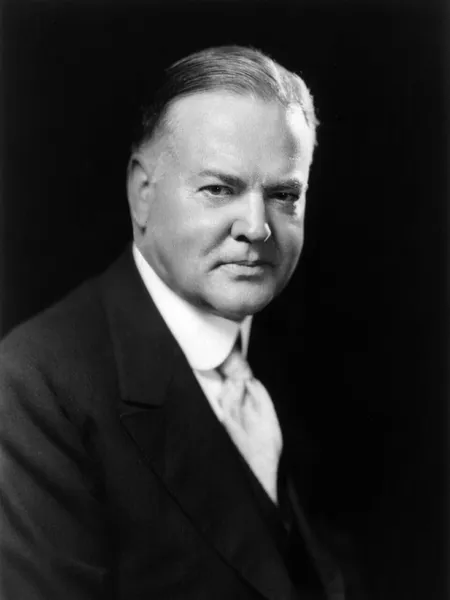
Herbert Clark Hoover (August 10, 1874 – October 20, 1964) was the 31st president of the United States, serving from 1929 to 1933. Hoover's term as president was dominated by the Great Depression. His ineffectual response to the growing economic calamity made him widely unpopular, and he lost reelection to Franklin D. Roosevelt in the 1932 United States presidential election. In 1895, Hoover became one of the first graduates of the new Stanford University. He took a position with a London-based mining company working in Australia and China. Hoover rapidly became a wealthy mining engineer and businessman. In 1914, during World War I, he organized and headed the Commission for Relief in Belgium, an international organization that provided food to occupied Belgium. When the U.S. entered the war in 1917, President Woodrow Wilson appointed Hoover to lead the U.S. Food Administration. He became famous as his country's "food dictator". After the war, Hoover led the American Relief Administration, which fed starving millions in Central and Eastern Europe, especially Russia. His wartime service made him a favorite of many progressives, and he unsuccessfully sought the Republican nomination in the 1920 United States presidential election. Hoover served as Secretary of Commerce under presidents Warren G. Harding and Calvin Coolidge. Hoover was an unusually active and visible Cabinet member, becoming known as "Secretary of Commerce and Under-Secretary of all other departments." He was influential in the development of air travel and radio. Hoover led the federal response to the Great Mississippi Flood of 1927. He won the Republican nomination in the 1928 presidential election and defeated Democratic candidate Al Smith in a landslide. In 1929, Hoover assumed the presidency. However, during his first year in office, the stock market crashed, signaling the onset of the Great Depression. Hoover supported the Mexican Repatriation and his response to the Great Depression was widely seen as lackluster. As the Great Depression deepened year after year, he lost in a landslide to Democratic nominee Franklin D. Roosevelt in the 1932 presidential election. Hoover's retirement lasted more than 31 years, one of the longest presidential retirements. He authored numerous works and became increasingly conservative, strongly criticizing Roosevelt's foreign policy and the New Deal.
Also on this shelf
Fan (machine).
Gilded Age.
See also
Uncatalogued shelfText from Wikipedia; plate via Wikimedia Commons. Text CC BY-SA 4.0; plate freely licensed (see Commons). Source record. Images and catalogue data are reproduced from open-access collections.