Invention and Engineering
Construction 3D printing
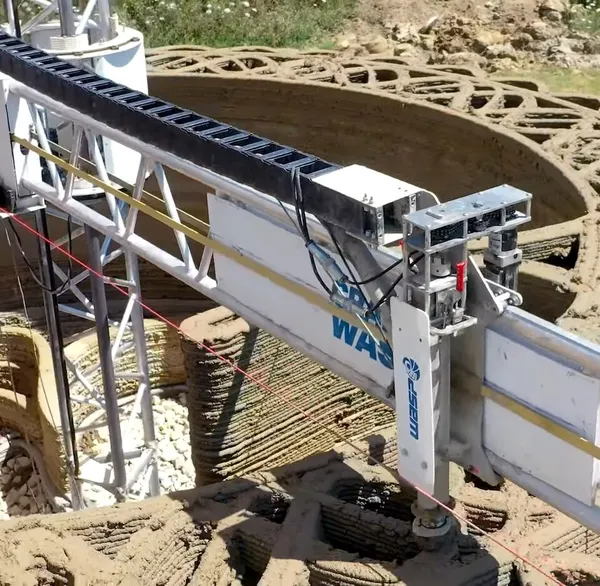
Construction 3D Printing (c3Dp) or 3D construction Printing (3DCP) refers to various technologies that use 3D printing as a core method to fabricate buildings or construction components. Alternative terms for this process include "additive construction." "3D Concrete" refers to concrete extrusion technologies whereas autonomous robotic construction System (ARCS), large-scale additive manufacturing (LSAM), and freeform construction (FC) refer to other sub-groups. At construction scale, the main 3D-printing methods are extrusion (concrete/cement, wax, foam, polymers), powder bonding (polymer bond, reactive bond, sintering), and additive welding. A number of different approaches have been demonstrated to date, which include on-site and off-site fabrication of buildings and construction components, using industrial robots, gantry systems, and tethered autonomous vehicles. Demonstrations of construction 3D printing technologies have included fabrication of housing, construction components (cladding and structural panels and columns), bridges and civil infrastructure, artificial reefs, follies, and sculptures. 3D concrete printing is an emerging technology with the potential to transform building and infrastructure construction by reducing time, material usage, labor requirements, and overall costs, while also enhancing sustainability and minimizing environmental impact. Despite its promise, the technology faces several challenges, including the development and optimization of material mixes, ensuring process consistency and quality control, maintaining structural integrity and durability, and addressing gaps in industry regulation and standardization.
Also on this shelf
GWR 4000 Class.
Grand Trunk Western 6323.
See also
Uncatalogued shelfText from Wikipedia; plate via Wikimedia Commons. Text CC BY-SA 4.0; plate freely licensed (see Commons). Source record. Images and catalogue data are reproduced from open-access collections.