Invention and Engineering
Forward-looking infrared
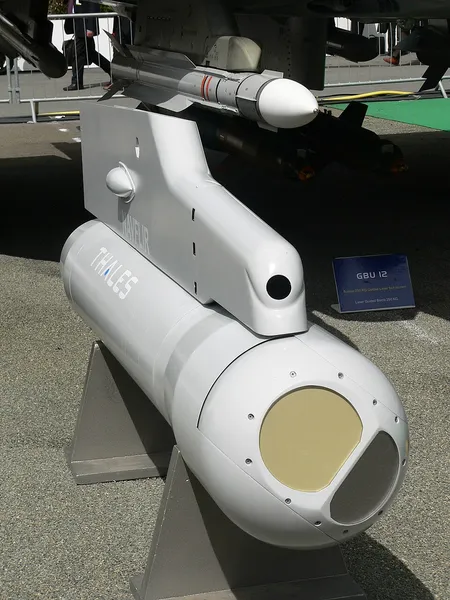
Forward-looking infrared (FLIR) cameras, typically used on military and civilian aircraft, use a thermographic camera that senses infrared radiation. The sensors installed in forward-looking infrared cameras, as well as those of other thermal imaging cameras, use detection of infrared radiation, typically emitted from a heat source (thermal radiation), to create an image assembled for video output. They can be used to help pilots and drivers steer their vehicles at night and in fog, or to detect warm objects against a cooler background. The wavelength of infrared that thermal imaging cameras detect is 3 to 12 μm and differs significantly from that of night vision, which operates in the visible light and near-infrared ranges (0.4 to 1.0 μm).
Also on this shelf
Chicago and North Western 1385.
GWR 9400 Class.
See also
Uncatalogued shelfText from Wikipedia; plate via Wikimedia Commons. Text CC BY-SA 4.0; plate freely licensed (see Commons). Source record. Images and catalogue data are reproduced from open-access collections.