Invention and Engineering
Diversity, equity, and inclusion
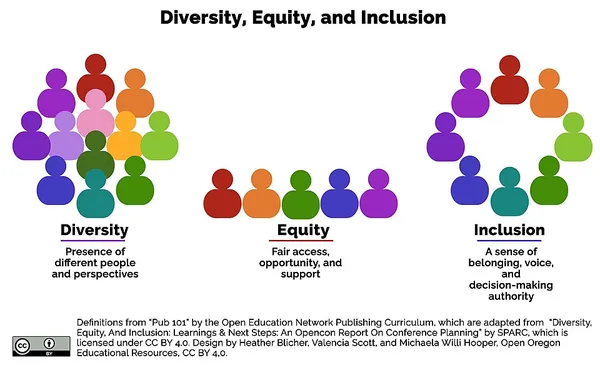
Diversity, equity, and inclusion (DEI, also known in the United Kingdom as equality, diversity, and inclusion (EDI)) are organizational frameworks that seek to promote the fair treatment and full participation of all people, particularly groups who have historically been underrepresented, marginalized, or subject to discrimination based on identity or disability. These three notions (diversity, equity, and inclusion) together represent "three closely linked values", which organizations seek to institutionalize through DEI frameworks. Diversity refers to the presence of variety within the organizational workforce in characteristics, such as race, gender, ethnicity, sexual orientation, disability, age, politics, culture, class, veteran status, or religion. Equity refers to concepts of fairness and justice, such as fair compensation and substantive equality. More specifically, equity usually also includes a focus on societal disparities, allocating resources, "decision making authority to groups that have historically been disadvantaged", and taking "into consideration a person's unique circumstances, adjusting treatment accordingly so that the end result is equal". Inclusion refers to creating an organizational culture that creates an experience where "all employees feel their voices will be heard" and a sense of belonging and integration. DEI policies are often used by managers to increase the productivity and collaborative efforts of their workforce and to reinforce positive communication. While DEI is most associated with non-elected government or corporate environments, it is commonly implemented within many types of organizations, such as charitable organizations, schools, and hospitals. DEI policies often include certain training efforts, such as diversity training. DEI efforts and policies have generated criticism and controversy. Some criticism has been directed at the specific effectiveness of its tools and its effects on free speech and academic freedom, while other criticism has related to broader political or philosophical objections. In addition, the term "DEI" has gained traction among conservative groups as a derogatory term for minority groups in the United States, who feel that the term is a pretext for discrimination against the majority.
Also on this shelf
Gordian Ezekwe.
Hulett.
See also
Uncatalogued shelfText from Wikipedia; plate via Wikimedia Commons. Text CC BY-SA 4.0; plate freely licensed (see Commons). Source record. Images and catalogue data are reproduced from open-access collections.