Invention and Engineering
Electrolysis of water
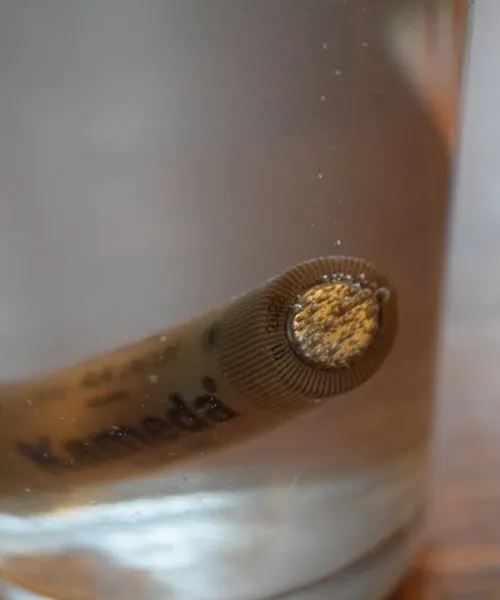
Water electrolysis is a term for processes that use electricity to convert liquid water (H2O) into gaseous hydrogen (H2) and oxygen (O2). The hydrogen produced by electrolysis can be used as fuel or as an industrial feedstock, most notably for the production of fertilizers. Because the underlying chemical reaction (water splitting) does not produce greenhouse gases, the emissions footprint of electrolysis can be lower than technologies that produce hydrogen from fossil fuels (e.g. steam reforming). Maximizing the electrical efficiency and minimizing the material cost of electrolysis is a key research problem in contemporary chemical engineering, electrochemistry, and materials science.
Also on this shelf
History of television.
Bank secrecy.
See also
Uncatalogued shelfText from Wikipedia; plate via Wikimedia Commons. Text CC BY-SA 4.0; plate freely licensed (see Commons). Source record. Images and catalogue data are reproduced from open-access collections.