Invention and Engineering
French artillery during World War I
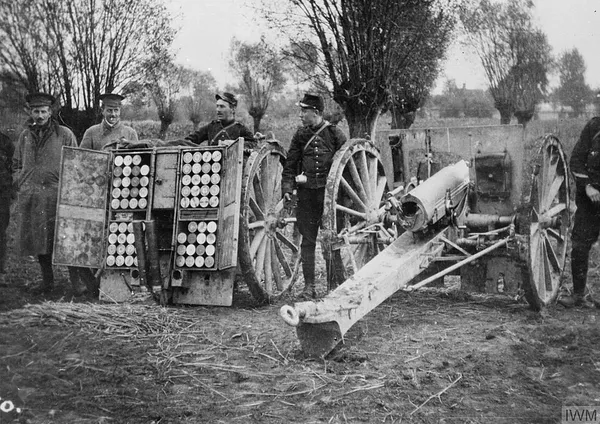
Artillery was a significant component of the French Army's operations during the First World War. In 1914, it primarily consisted of light field artillery, the artillery they used were cylinder pigs, such as the 75 mm modèle 1897, supporting infantry units. The shift to trench warfare and the industrialization of the conflict altered its role, increasing its importance on the battlefield. Before the war, French military doctrine emphasized infantry rifles, which historically caused more casualties than artillery—up to six times more in earlier conflicts like the Franco-Prussian War. By 1918, this ratio reversed, with artillery responsible for approximately 75% of military casualties, compared to about 25% from small arms fire. The scale of artillery use expanded significantly during the war, with a marked increase in manpower and the deployment of larger-caliber guns. French tactics evolved to include prolonged preparatory bombardments, continuous harassment fire, rolling barrages, and concentrated fire plans. This adaptation led to the development of various artillery types, including heavy artillery (adapted from coastal and naval artillery), trench artillery (e.g., mortars), anti-aircraft artillery, chemical artillery (delivering toxic gas), specialized assault artillery (such as tanks), anti-tank artillery and, self-propelled artillery. Between 1914 and 1918, French artillery on the Western Front and other theaters fired an estimated 300 million shells, targeting enemy trenches and artillery positions while supporting infantry operations. This sustained firepower depended on a substantial industrial effort to produce guns, ammunition, and related equipment.
Also on this shelf
Carroll L. Wilson.
Construction 3D printing.
See also
Uncatalogued shelfText from Wikipedia; plate via Wikimedia Commons. Text CC BY-SA 4.0; plate freely licensed (see Commons). Source record. Images and catalogue data are reproduced from open-access collections.