Invention and Engineering
Edison screw
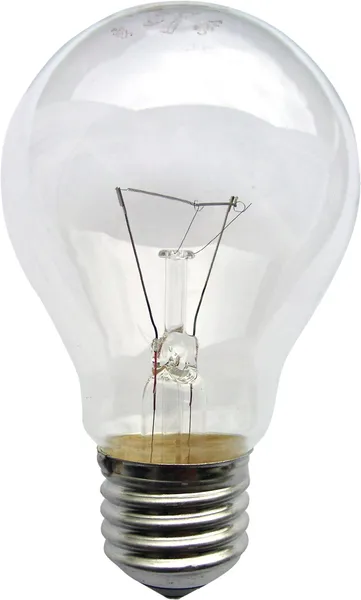
Edison screw (ES) is a standard lightbulb socket for electric light bulbs. It was developed by Thomas Edison (1847–1931), patented in 1881, and was licensed in 1909 under General Electric's Mazda trademark. The bulbs have right-hand threaded metal bases (caps) which screw into matching threaded sockets (lamp holders). For bulbs powered by AC current, the thread is generally connected to neutral and the contact on the bottom tip of the base is connected to the "live" phase. In North America and continental Europe, Edison screws displaced other socket types for general lighting. In the early days of electrification, Edison screws were the only standard connector, and appliances other than light bulbs were connected to AC power via lamp sockets. The Edison base was also used as the original base for camera flash bulbs.Today Edison screw sockets comply with international standards. Their types are designated as "Exx", such as "E26", where "xx" indicates the diameter of the socket in millimeters.
Also on this shelf
Hydrology.
Aluminium recycling.
See also
Uncatalogued shelfText from Wikipedia; plate via Wikimedia Commons. Text CC BY-SA 4.0; plate freely licensed (see Commons). Source record. Images and catalogue data are reproduced from open-access collections.