Invention and Engineering
Economic history of World War I
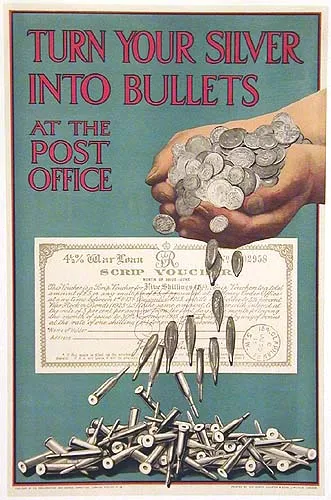
The economic history of World War I covers the methods used by the First World War (1914–1918), as well as related postwar issues such as war debts and reparations. It also covers the economic mobilization of labour, industry, and agriculture leading to economic failure. It deals with economic warfare such as the blockade of Germany, and with some issues closely related to the economy, such as military issues of transportation. For a broader perspective see home front during World War I. As airplanes were not in use at the time, transportation became much more costly. All of the powers in 1914 expected a short war; none had made any economic preparations for a long war, such as stockpiling food or critical raw materials. The longer the war went on, the more the advantages went to the Allies, with their larger, deeper, more versatile economies and better access to global supplies. As Stephen Broadberry and Mark Harrison conclude, once stalemate set in late in 1914: "The greater Allied capacity for taking risks, absorbing the cost of mistakes, replacing losses, and accumulating overwhelming quantitative superiority should eventually have turned the balance against Germany". The Allies had much more potential wealth they could spend on the war. One estimate (using 1913 US dollars) is that the Allies spent $147 billion on the war and the Central Powers only $61 billion, but Germany concentrated the largest industrial conglomerate in the Rhineland region. Among the Allies, Britain and its Empire spent $47 billion and the U.S. $27 billion (the U.S. joined after the war started) while among the Central Powers, Germany spent $45 billion. Total war demanded total mobilization of all the nation's resources for a common goal. Manpower had to be channeled into the front lines (all the powers except the United States and Britain had large trained reserves designed just for that). Behind the lines labour power had to be redirected away from less necessary activities that were luxuries during total war. In particular, vast munitions industries had to be built up to provide shells, guns, warships, uniforms, airplanes, and a hundred other weapons both old and new.
Also on this shelf
Culture and menstruation.
DRG H 02 1001.
See also
Uncatalogued shelfText from Wikipedia; plate via Wikimedia Commons. Text CC BY-SA 4.0; plate freely licensed (see Commons). Source record. Images and catalogue data are reproduced from open-access collections.