Invention and Engineering
Chemical element
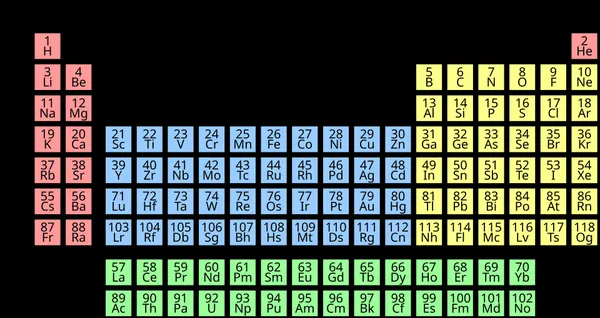
A chemical element is a species of atom defined by its number of protons. The number of protons is called the atomic number of that element. For example, oxygen has an atomic number of 8: each oxygen atom has 8 protons in its nucleus. Atoms of the same element can have different numbers of neutrons in their nuclei, known as isotopes of the element. Atoms of one element can be transformed into atoms of a different element in nuclear reactions, which change an atom's atomic number. Almost all baryonic matter in the universe is composed of elements (among rare exceptions are neutron stars). The term "chemical element" is also widely used to mean a pure chemical substance consisting of a single element. For example, oxygen gas consists only of atoms of oxygen. Historically, the term "chemical element" meant a substance that cannot be broken down into constituent substances by chemical reactions, and for most practical purposes this definition still has validity. There was some controversy in the 1920s over whether isotopes deserved to be recognised as separate elements if they could be separated by chemical means. By November 2016, the International Union of Pure and Applied Chemistry (IUPAC) recognized a total of 118 elements. The first 94 occur naturally on Earth, and the remaining 24 are synthetic elements produced in nuclear reactions. Save for unstable radioactive elements (radioelements) which decay quickly, nearly all elements are available industrially in varying amounts. The discovery and synthesis of further new elements is an ongoing area of scientific study. The history of the discovery and use of elements began with early human societies that discovered native minerals such as carbon, sulfur, copper, and gold (though the modern concept of an element was not yet understood). Attempts to classify materials such as these resulted in the concepts of classical elements, alchemy, and similar theories throughout history. Much of the modern understanding of elements developed from the work of Dmitri Mendeleev, a Russian chemist who published the first recognizable periodic table in 1869. This table organizes the elements by increasing atomic number into rows ("periods") in which the columns ("groups") share recurring ("periodic") physical and chemical properties.
Also on this shelf
Coordinate-measuring machine.
Carbon nanotube.
See also
Uncatalogued shelfText from Wikipedia; plate via Wikimedia Commons. Text CC BY-SA 4.0; plate freely licensed (see Commons). Source record. Images and catalogue data are reproduced from open-access collections.