Invention and Engineering
DeWitt Clinton (locomotive)
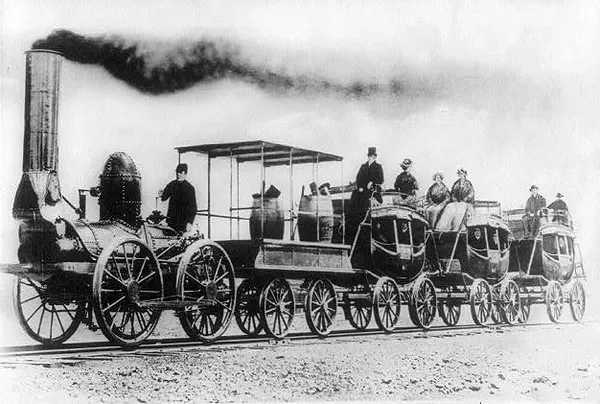
The DeWitt Clinton of the Mohawk and Hudson Railroad (M&H) was an American steam locomotive and the first working steam locomotive built for service in New York state. The locomotive was built in 1831 and began operations the same year. It was named in honor of DeWitt Clinton, the governor of New York State responsible for the Erie Canal, a competitor to the railroad. Portions of the steam engine were cast at the West Point Foundry in Cold Spring, New York. The DeWitt Clinton's first run was from the city of Albany, New York, to Schenectady, New York, a run of 16 or 17 mi (26 or 27 km). Its passenger cars were made of stagecoach bodies in which riders would sit either inside or on outdoor rumble seats. The cars were known as Goold cars and were named after coach builder James Goold of Albany. The locomotive was scrapped in 1833. The M&H became part of the New York Central Railroad (NYCR) system in 1853. The New York Central Railroad built a replica of the locomotive for display at the Columbian Exposition in Chicago in 1893. This replica would continue to be used for promotional purposes until it was purchased by Henry Ford in 1934. Since then, it has been on display at the Henry Ford Museum in Dearborn, Michigan.
Also on this shelf
Futures studies.
DRG Class 01.
See also
Uncatalogued shelfText from Wikipedia; plate via Wikimedia Commons. Text CC BY-SA 4.0; plate freely licensed (see Commons). Source record. Images and catalogue data are reproduced from open-access collections.