Invention and Engineering
Compound engine
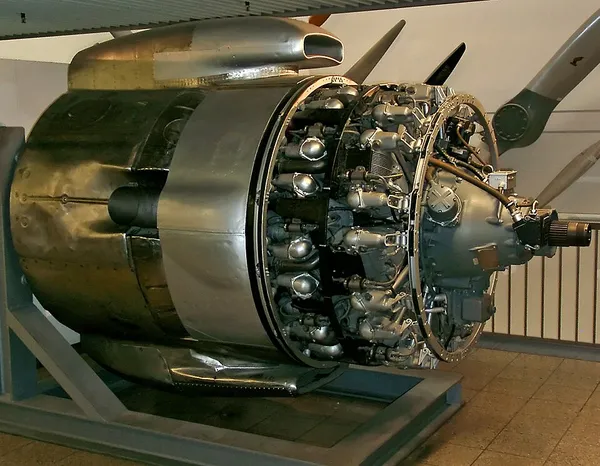
A compound engine is an engine that has more than one stage for recovering energy from the same working fluid, with the exhaust from the first stage passing through the second stage, and in some cases then on to another subsequent stage or even stages. Originally invented as a means of making steam engines more efficient, the compounding of engines by use of several stages has also been used on internal combustion engines and continues to have niche markets there. The stages of a compound engine may be either of differing or of similar technologies, for example: In a turbo-compound engine, the exhaust gas from the cylinders passes through a turbine; the recovered energy is then sent back to the crankshaft or auxiliary systems, instead of driving a compressor In a compound steam locomotive, the steam passes from the high-pressure cylinder or cylinders to the low-pressure cylinder or cylinders, the two stages being similar. In a triple-expansion steam engine, the steam passes through three successive cylinders of increasing size and decreasing pressure. Such engines were the most common marine engines in the golden age of steam. These examples and compound turbines are the main but not the only uses of compounding in engines; see below.
Also on this shelf
Feedback.
Caledonian Railway 191 Class.
See also
Uncatalogued shelfText from Wikipedia; plate via Wikimedia Commons. Text CC BY-SA 4.0; plate freely licensed (see Commons). Source record. Images and catalogue data are reproduced from open-access collections.