Invention and Engineering
19th-century glassmaking innovations in the United States
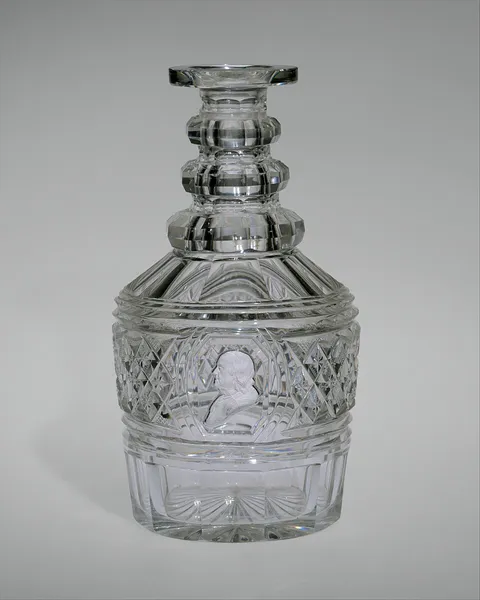
Very few 19th-century glassmaking innovations in the United States happened at the beginning of the century. Only ten glass manufacturers are thought to have been operating in 1800. High-quality glassware was imported from England, and glassmaking knowledge was kept secret. England controlled a key ingredient for producing high–quality glassware and kept its price high—making it difficult for American glass manufacturers to compete price-wise. European glassmakers with the knowledge to produce high–quality glassware were, in some cases, smuggled to the United States. Eventually the American glass industry grew, and the second half of the century saw numerous innovations. The two most significant innovations of the 19th century were mechanical pressing and a new formula for high quality glass. Mechanical pressing increased productivity and allowed more of the public to afford glassware. It was developed simultaneously at several locations during the 1820s. Among those that received pressing-related patents were John P. Bakewell of Bakewell and Company; Henry Whitney and Enoch Robinson of New England Glass Company; and Phineas C. Dummer, George Dummer, and James Maxwell of the Jersey City Glass Works. A new formula for glass, developed by William Leighton Sr. at J. H. Hobbs, Brockunier and Company, lowered costs and allowed even more people to afford glassware. Many mechanical innovations in the last half of the century involved the procedure for melting ingredients, cooling (annealing) newly made glass, and automation. By the end of the century a new machine designed by John H. Lubbers began to make many glassblowers obsolete, and work was being conducted on a bottle-making machine by Michael J. Owens that eventually revolutionized the bottle industry. Preliminary work by Irving Wightman Colburn had started that would change the way window glass was made. Owens and Colburn worked together to finish this new window glass process during the 20th century. A new formula for ruby glass, which did not need gold as an additive, was developed by Nicholas Kopp Jr. in the 1890s around the time of the start of the American auto industry.
Also on this shelf
Brooklyn Eastern District Terminal 15.
Daniele Archibugi.
See also
Uncatalogued shelfText from Wikipedia; plate via Wikimedia Commons. Text CC BY-SA 4.0; plate freely licensed (see Commons). Source record. Images and catalogue data are reproduced from open-access collections.