Invention and Engineering
Hemp
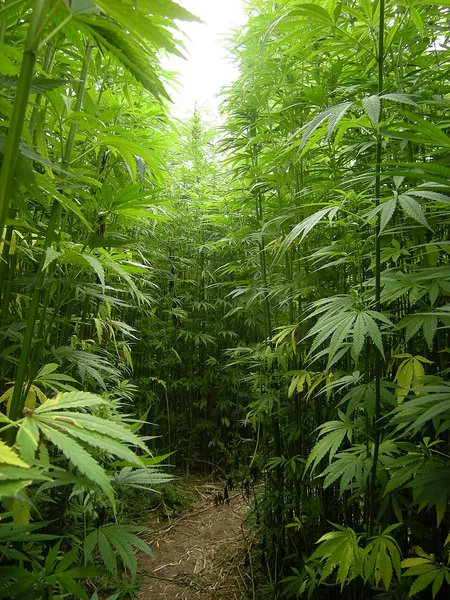
The term hemp is the vernacular English language word designating the plant Cannabis sativa, a plant that can be used to make a wide range of products, and be refined into a variety of commercial items, including paper, rope, textiles, clothing, biodegradable plastics, paint, insulation, biofuel, food, medicines, and animal feed. Along with bamboo, hemp is among the fastest growing plants on Earth and was also one of the first plants to be spun into usable fiber 50,000 years ago. The term "hemp" has also traditionally been used as a generic name to refer to various fibrous plants, which have no botanical relation with Cannabis. These include Manila hemp, bog hemp, sisal hemp, New Zealand hemp, Deccan hemp, or Madras hemp (also at times called Indian hemp). Regarding the Cannabis species, there remains two approaches depending on the region and the epoch, with term having various acceptions: All forms of Cannabis (particularly in older texts), with types differentiated binomially (Winter hemp, Summer hemp, Indian hemp...); Some varieties of Cannabis: a subgroup of the varietals or cultivars of the Cannabis species; Only Cannabis plants grown as a source of fiber and/or seed (and not of the psychoactive resin contained in the plant's tops), Only Cannabis plants grown for certain "purposes", including contemporary industrial hemp which includes all parts of the plant (and might therefore include tops with substances such as cannabidiol) The legality of hemp varies widely among countries, and with it, the definitions of the term. Globally, two approaches exist to understanding what the term "hemp" covers: In most developed Western countries, governments regulate the concentration of the psychoactive component tetrahydrocannabinol (THC) and permit only a limited number of hemp cultivars, bred with an especially low THC content into commercial production. This is articulated with the view that a chemotype I (for higher-THC cannabis) represents a distinct cultivar as compared to the hemp chemotypes (II, III, IV, V) even though they are both Cannabis sativa. This amounts to a binomial separation, contained in U.S.
Also on this shelf
Chalcolithic.
Catalytic converter.
See also
Uncatalogued shelfText from Wikipedia; plate via Wikimedia Commons. Text CC BY-SA 4.0; plate freely licensed (see Commons). Source record. Images and catalogue data are reproduced from open-access collections.