Invention and Engineering
Industrial Revolution in Scotland
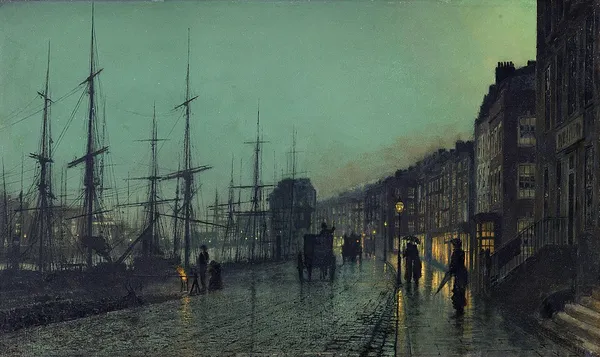
In Scotland, the Industrial Revolution was the transition to new manufacturing processes and economic expansion between the mid-eighteenth century and the late nineteenth century. By the start of the eighteenth century, a political union between Scotland and England became economically and politically attractive, promising to open up the much larger markets of England, as well as those of the growing British Empire, resulting in the Treaty of Union of 1707. There was a conscious attempt among the gentry and the nobility to improve agriculture in Scotland. New crops were introduced and enclosures began to displace the run rig system and free pasture. The economic benefits of union were very slow to appear, some progress was visible, such as the sales of linen and cattle to England, the cash flows from military service, and the tobacco trade that was dominated by Glasgow after 1740. Merchants who profited from the American trade began investing in leather, textiles, iron, coal, sugar, rope, sailcloth, glass-works, breweries, and soap-works, setting the foundations for the city's emergence as a leading industrial center after 1815. The linen industry was Scotland's premier industry in the eighteenth century and formed the basis for the later cotton, jute, and woolen industries. Encouraged and subsidized by the Board of Trustees so it could compete with German products, merchant entrepreneurs became dominant in all stages of linen manufacturing and built up the market share of Scottish linens, especially in the American colonial market. Historians often emphasize that the flexibility and dynamism of the Scottish banking system contributed significantly to the rapid development of the economy in the nineteenth century. At first the leading industry, based in the west, was the spinning and weaving of cotton. After the cutting off of supplies of raw cotton from 1861 as a result of the American Civil War Scottish entrepreneurs and engineers, and its large stock of easily mined coal, the country diversified into engineering, shipbuilding, and locomotive construction, with steel replacing iron after 1870. As a result, Scotland became a center for engineering, shipbuilding and the production of locomotives. In the east of Scotland, particularly in Dundee, mechanised jute manufacture from the 1830s created one of the largest textile concentrations in the world.
Also on this shelf
China Railways JF7.
Cleve Moler.
See also
Uncatalogued shelfText from Wikipedia; plate via Wikimedia Commons. Text CC BY-SA 4.0; plate freely licensed (see Commons). Source record. Images and catalogue data are reproduced from open-access collections.