Invention and Engineering
Cellular network
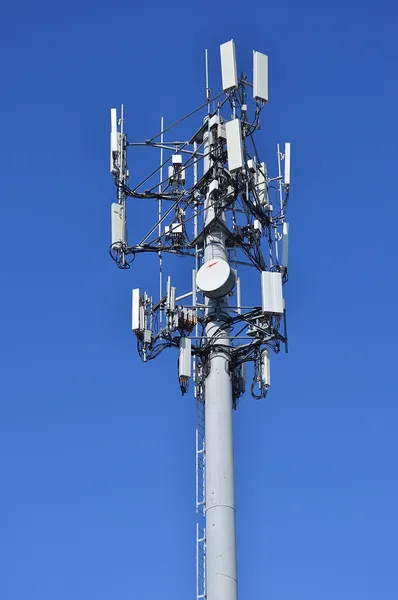
A cellular network or mobile network (sometimes known as cellular communication network or mobile communication network) is a telecommunications network where the link to and from end nodes is wireless and the network is distributed over land areas called cells, each served by at least one fixed-location transceiver (such as a base station). These base stations provide the cell with the network coverage which can be used for transmission of voice, data, and other types of content via radio waves. Each cell's coverage area is determined by factors such as the power of the transceiver, the terrain, and the frequency band being used. A cell typically uses a different set of frequencies from neighboring cells, to avoid interference and provide guaranteed service quality within each cell. When joined, these cells provide radio coverage over a wide geographic area. This enables numerous devices, such as mobile phones, tablets, laptops equipped with mobile broadband modems, and wearable devices such as smartwatches, to communicate with each other and with fixed transceivers and telephones anywhere in the network, via base stations, even if some of the devices are moving through more than one cell during transmission.
Also on this shelf
GWR 101 Class.
Engine.
See also
Uncatalogued shelfText from Wikipedia; plate via Wikimedia Commons. Text CC BY-SA 4.0; plate freely licensed (see Commons). Source record. Images and catalogue data are reproduced from open-access collections.