Invention and Engineering
Economy of Austria-Hungary
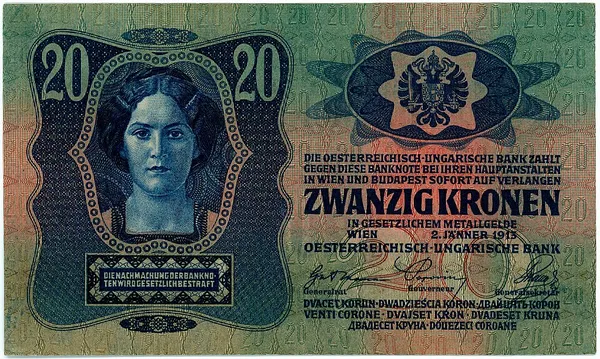
The economy of Austria-Hungary changed slowly during the existence of the Dual Monarchy, 1867–1918. The capitalist way of production spread throughout the Empire during its 50-year existence replacing medieval institutions. In 1873, the old capital Buda and Óbuda (ancient Buda) merged with the third city, Pest, thus creating the new metropolis of Budapest. The dynamic Pest grew into Hungary's administrative, political, economic, trade and cultural hub. Many of the state institutions and the modern administrative system of Hungary were established during this period. Austria-Hungary was a large, heavily rural country with wealth and income levels comparable to France or the USA in 1870. Growth rates were similar to Europe as a whole. After 1895 emigration became a major factor, with most headed to the United States. The Habsburg realms included 23 million inhabitants in 1800, growing to 36 million by 1870, third in population size behind Russia and Germany. The per capita rate of industrial growth averaged about 3% between 1818 and 1870. However there were strong regional differences. There was relatively little international trade. In the Alpine and Bohemian regions, proto-industrialization had begun by 1750, and became the center of the first phases of the industrial revolution after 1800. The textile industry was the main factor, utilizing mechanization, steam engines, and the factory system. Much of the machinery was purchased from the British. In the Bohemian regions, machine spinning started later and only became a major factor by 1840. Bohemia's resources were successfully exploited, growing 10% a year. The iron industry had developed in the Alpine regions after 1750, with smaller centers in Bohemia and Moravia. Key factors included the replacement of charcoal by coal, introduction of steam engine, and the rolling regard. The first steam engines of continental Europe was built in Újbánya – Köngisberg, Kingdom of Hungary (Today Nová Baňa Slovakia) in 1722. These were similar to the Newcomen engines, they served on pumping water from mines. Hungary was heavily rural with little industry before 1870. The first machine building factories appeared in the 1840s.
Also on this shelf
Cleve Moler.
GWR 1361 Class.
See also
Uncatalogued shelfText from Wikipedia; plate via Wikimedia Commons. Text CC BY-SA 4.0; plate freely licensed (see Commons). Source record. Images and catalogue data are reproduced from open-access collections.