Invention and Engineering
History of Gibraltar
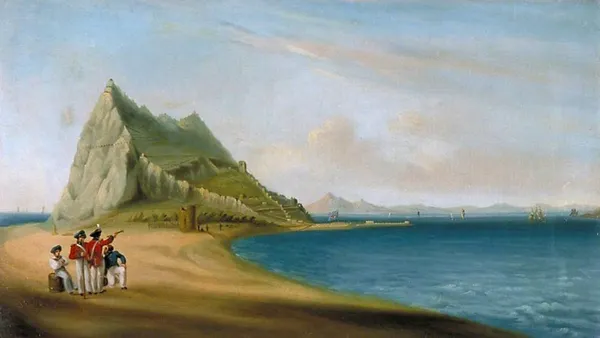
The history of Gibraltar, a small peninsula on the southern Iberian coast near the entrance of the Mediterranean Sea, spans over 2,900 years. The peninsula was a place of reverence in ancient times, and it later became "one of the most densely fortified and fought-over places in Europe". Gibraltar's location has given it an outsized role in the history of Europe. Its fortified town, established in the Middle Ages, has hosted garrisons that have fought in numerous sieges and battles over the centuries. The Rock of Gibraltar is a limestone monolith and fortress in Gibraltar that has held historical and military significance and has become a tourist attraction. Gibraltar was first inhabited over 50,000 years ago by Neanderthals. Gibraltar's recorded history began around 950 BC, with the Phoenicians among the first to recognise and worship the genius loci of the place. There is also evidence that shrines to Hercules were built on the Rock of Gibraltar. The Romans named the jutting protrusion of limestone Mons Calpe (the "Hollow Mountain"); they regarded it as one of the twin Pillars of Hercules. Gibraltar became part of the Visigothic Kingdom of Hispania following the collapse of the Roman Empire and came under Muslim Moorish rule in 711 AD. It was permanently settled for the first time by the Moors and was renamed Jebel Tariq (meaning "the Mount of Tariq"). This phrase was later corrupted into Gibraltar. The Christian Crown of Castile annexed Gibraltar in 1309, but lost it to the Moors in 1333. Gibraltar was retaken by the Castilians in 1462. It later became part of the unified Kingdom of Spain, and it remained under Spanish rule until 1704. Gibraltar was captured during the War of the Spanish Succession by an Anglo-Dutch fleet in the name of Charles VI of Austria, the Habsburg contender to the Spanish throne. At the war's end, Spain ceded the territory to Britain under the terms of the 1713 Treaty of Utrecht. While Spain attempted on multiple occasions to retake Gibraltar, its attempts were unsuccessful. By the late 18th century, Gibraltar had faced fourteen sieges over a period of 500 years. The colony grew rapidly during the 19th and early 20th centuries, becoming a stopping point for vessels en route to India via the Suez Canal.
Also on this shelf
Dan Mircea Ionel.
Defibrillation.
See also
Uncatalogued shelfText from Wikipedia; plate via Wikimedia Commons. Text CC BY-SA 4.0; plate freely licensed (see Commons). Source record. Images and catalogue data are reproduced from open-access collections.