Invention and Engineering
Gilded Age
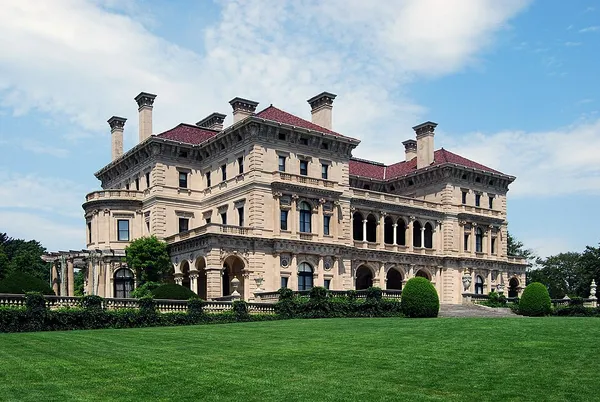
In United States history, the Gilded Age is the period from about the late 1870s to the late 1890s, which occurred between the Reconstruction era and the Progressive Era. It was named by 1920s historians after Mark Twain's 1873 novel The Gilded Age: A Tale of Today. It was a time of rapid economic and capital growth, especially in the North and West. As American wages grew much higher than those in Europe, especially for skilled workers, and industry demanded an increasingly skilled labor force, the period saw an influx of millions of European immigrants. The rapid expansion of industrialization led to real wage growth of 40% from 1860 to 1890, spreading across the expanding labor force. The Gilded Age was also an era of visible poverty. Though some earned more, the actual purchasing power advantage for many workers was somewhat smaller than raw wage comparisons suggest, especially accounting for comparatively high rents. Immigrants typically settled in industrial centers, and many planned to return to Europe with their earnings. Spending was therefore kept to a minimum, leading many to crowd into unsanitary tenements. Many Americans had sewing machines, phonographs, and even electric lights, yet a significant number labored in the shadow of poverty especially in the South. Economic inequality grew as the concentration of wealth became more visible and contentious, with urban slums developing and growing during this era. Railroads were the major growth industry, with the factory system, oil, mining, and finance increasing in importance. Immigration from Europe and migration from the Eastern United States, combined with hundreds of millions of acres of land given to settlers by the federal government for free through the Homestead Acts, led to the rapid growth of the West based on farming, ranching, and mining. Labor unions became increasingly important in the rapidly growing and industrializing cities. Two short nationwide depressions—the Panic of 1873 and the Panic of 1893—briefly interrupted growth and caused violent labor strife. The South remained economically devastated after the American Civil War. The South's economy became increasingly tied to commodities like food and building materials, cotton for thread and fabrics, and tobacco production, all of which suffered from low prices.
Also on this shelf
Genetic programming.
Edaville Railroad.
See also
Uncatalogued shelfText from Wikipedia; plate via Wikimedia Commons. Text CC BY-SA 4.0; plate freely licensed (see Commons). Source record. Images and catalogue data are reproduced from open-access collections.