Invention and Engineering
Homelessness in the United States
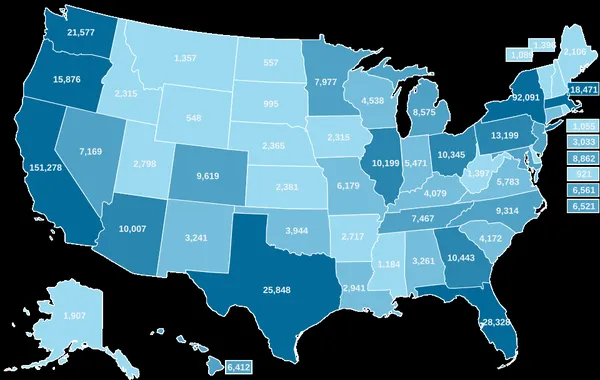
On a single night in January 2025, the U.S. Department of Housing and Urban Development estimated that 745,652 people were experiencing homelessness in the United States, including 266,320 in unsheltered locations, about 3% fewer overall than in 2024. Homelessness has increased in recent years, in large part due to an increasingly severe housing shortage and rising home prices in the United States. Most homeless people lived in California, New York, Florida, and Washington in 2022, according to the annual Homeless Assessment Report. The majority of homeless people in the United States have been homeless for less than one year; two surveys by YouGov in 2022 and 2023 found that just under 20 percent of Americans reported having ever been homeless. The main contributor to homelessness is a lack of housing supply and rising home values. Interpersonal and individual factors, such as mental illness and addiction, also play a role in explaining homelessness. However, mental illness and addiction play a weaker role than structural socio-economic factors, as West Coast cities such as Seattle, Portland, San Francisco, and Los Angeles have homelessness rates five times that of areas with much lower housing costs like Arkansas, West Virginia, and Detroit, even though the latter locations have high burdens of opioid addiction and poverty. Historically, homelessness emerged as a national issue in the 1870s. Early homeless people lived in emerging urban cities, such as New York City. Into the 20th century, the Great Depression of the 1930s caused a substantial rise in homelessness. In 1990, the U.S. Census Bureau estimated the homeless population to be of 228,621, or 0.09% of the 248,709,873 enumerated in the 1990 U.S. census, which homelessness advocates criticized as an undercount. In the 21st century, the Great Recession of the late 2000s and the resulting economic stagnation and downturn have been major driving factors and contributors to rising homelessness rates. Increases in homelessness broke records in 2022 and in 2023. In 2023, record levels of homelessness have been declared in Los Angeles and New York City, and other cities around the country have reported increased levels of homelessness, with the main drivers being a shortage of affordable housing and the increased cost of living.
Also on this shelf
Embodied energy.
China Railways SL6.
See also
Uncatalogued shelfText from Wikipedia; plate via Wikimedia Commons. Text CC BY-SA 4.0; plate freely licensed (see Commons). Source record. Images and catalogue data are reproduced from open-access collections.