Invention and Engineering
Disc brake
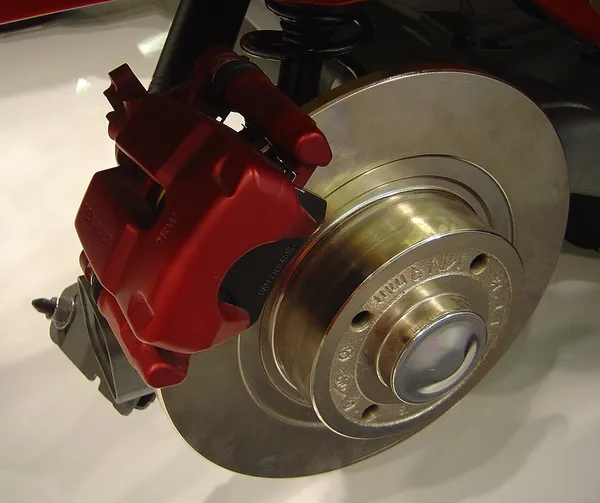
A disc brake is a type of brake that uses the calipers to squeeze pairs of pads against a disc (sometimes called a [brake] rotor) to create friction. There are two basic types of brake pad friction mechanisms: abrasive friction and adherent friction. This action slows the rotation of a shaft, such as a vehicle axle, either to reduce its rotational speed or to hold it stationary. The energy of motion is converted into heat, which must be dissipated to the environment. Disc brakes are found in most automobiles and are more expensive to manufacture than a drum brake. Disc brakes are also found on some higher-end bicycles. Hydraulically actuated disc brakes are the most commonly used mechanical braking system for motor vehicles. The principles of a disc brake apply to almost any rotating shaft. The components include the disc, master cylinder, and caliper, which contain at least one cylinder and two brake pads on both sides of the rotating disc.
Also on this shelf
Fritz Haber.
Baby boomers.
See also
Uncatalogued shelfText from Wikipedia; plate via Wikimedia Commons. Text CC BY-SA 4.0; plate freely licensed (see Commons). Source record. Images and catalogue data are reproduced from open-access collections.