Geology and Minerals
Dakota Formation
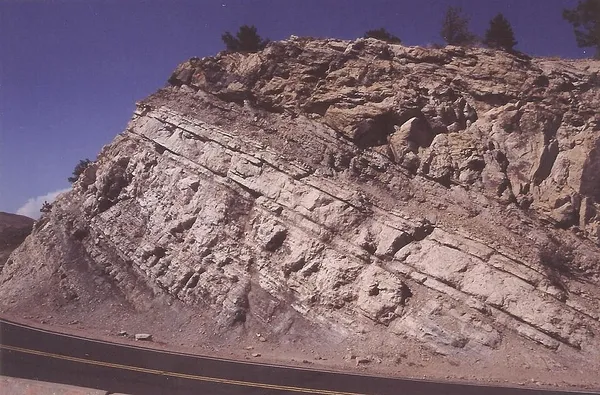
The Dakota is a sedimentary geologic unit name of formation and group rank in Midwestern North America. The Dakota units are generally composed of sandstones, mudstones, clays, and shales deposited in the Mid-Cretaceous opening of the Western Interior Seaway. The usage of the name Dakota for this particular Albian-Cenomanian strata is exceptionally widespread; from British Columbia and Alberta to Montana and Wisconsin to Colorado and Kansas to Utah and Arizona. It is famous for producing massive colorful rock formations in the Rocky Mountains and the Great Plains of the United States, and for preserving both dinosaur footprints and early deciduous tree leaves. Owing to extensive weathering of older rocks during the Jurassic and Triassic, the Dakota strata lie unconformably atop many different formations ranging in age from Precambrian to Early Cretaceous. With a few local exceptions, it is the oldest Cretaceous unit exposed in the northern Great Plains, including Kansas, Nebraska, Iowa, Minnesota, and Wisconsin, as well as the Desert Southwest. It generally consists of sandy, shallow marine or beach deposits with marine-influenced mudflat sediments, and occasional stream deposits.
Also on this shelf
Geology of the Pyrenees.
Eylesbarrow mine.
See also
Uncatalogued shelfText from Wikipedia; plate via Wikimedia Commons. Text CC BY-SA 4.0; plate freely licensed (see Commons). Source record. Images and catalogue data are reproduced from open-access collections.