Geology and Minerals
Brook (stream)
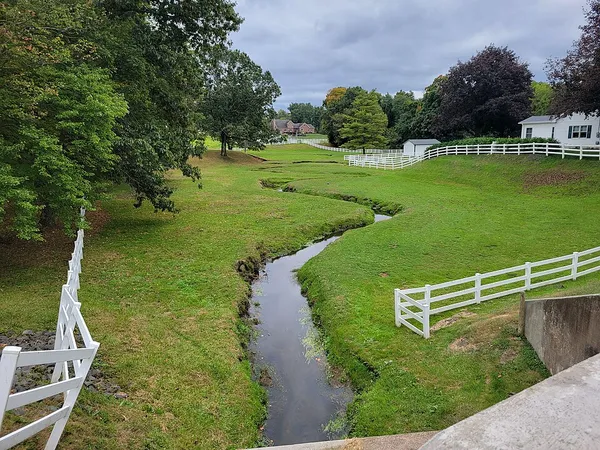
A brook is a small natural stream or watercourse, sometimes also referred to as a rivulet. It is typically shallow and carries less water than larger streams and rivers. The term is sometimes used particularly for a stream that originates from a spring or seep. The distinction between a brook and other small watercourses, particularly a creek, is not precisely defined. The names given to flowing watercourses vary according to regional usage, historical naming conventions and local geography, and there is no universally accepted width, depth or discharge at which a brook becomes a creek or river. Particularly small brooks may also be known as rills or streamlets. The amount of water carried by a brook can fluctuate considerably. Brooks generally consist of flowing freshwater confined within a relatively narrow natural channel. Despite their small size, brooks and other small headwater streams can form important freshwater ecosystems. Small headwater streams also influence the ecology of larger waterways. Brooks with intermittent or ephemeral flow can support communities adapted to alternating wet and dry conditions. Small streams comparable to modern brooks were used by ancient communities for water supply, drainage and other practical purposes. Small watercourses have also served as geographical landmarks and territorial boundaries.
Also on this shelf
Alcedo Volcano.
Cinder cone.
See also
Uncatalogued shelfText from Wikipedia; plate via Wikimedia Commons. Text CC BY-SA 4.0; plate freely licensed (see Commons). Source record. Images and catalogue data are reproduced from open-access collections.