Geology and Minerals
Extremophile
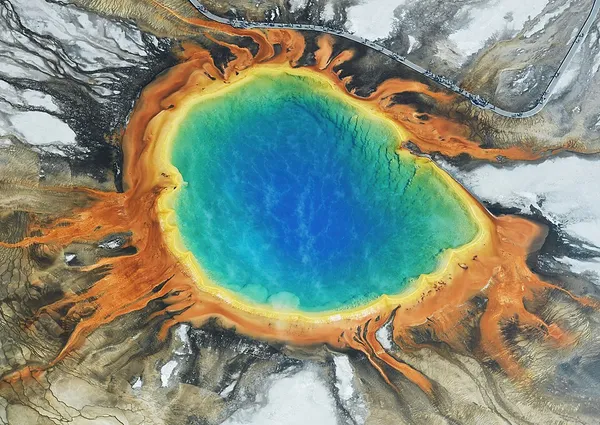
An extremophile (from Latin extremus 'extreme' and Ancient Greek φιλία (philía) 'love') is an organism that is able to live or even thrive in extreme environments, such as extreme temperature (hot or cold), pressure, radiation, salinity, or pH level. Extremophiles are mainly species of microorganisms – bacteria and chiefly archaea, but also include some eukaryotes such as some fungi, and tardigrades. Since the definition of an extreme environment is relative to an arbitrarily defined standard, often an anthropocentric one, these organisms can be considered ecologically dominant in the evolutionary history of the planet. Extremophiles have continued to thrive in the most extreme conditions, making them one of the most abundant lifeforms. The study of extremophiles has expanded human knowledge of the limits of life, and informs speculation about extraterrestrial life. Extremophiles are also of interest because of their potential for bioremediation of environments made hazardous to humans due to pollution or contamination.
Also on this shelf
Carbon sequestration.
Basaltic andesite.
See also
Uncatalogued shelfText from Wikipedia; plate via Wikimedia Commons. Text CC BY-SA 4.0; plate freely licensed (see Commons). Source record. Images and catalogue data are reproduced from open-access collections.