Geology and Minerals
Fumarole mineral
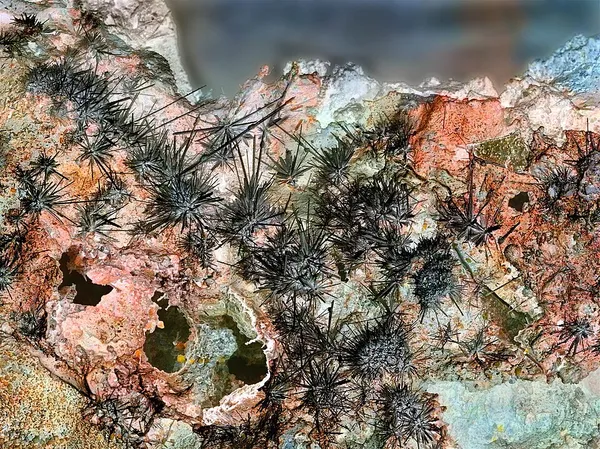
Fumarole minerals (or fumarolic minerals) are minerals which are deposited by fumarole exhalations. They form when gases and compounds desublimate or precipitate out of condensates, forming mineral deposits. They are mostly associated with volcanoes (as volcanic sublimate or fumarolic sublimate) following deposition from volcanic gas during an eruption or discharge from a volcanic vent or fumarole, but have been encountered on burning coal deposits as well. They can be black or multicoloured and are often unstable upon exposure to the atmosphere. Native sulfur, in this context called brimstone, is a common sublimate mineral and various halides, sulfides and sulfates occur in this environment associated with fumaroles and eruptions. A number of rare minerals are fumarole minerals, and at least 240 such minerals are known from Tolbachik volcano in Kamchatka, Russia. Other volcanoes where particular fumarole minerals have been discovered are Vulcano in Italy and Bezymyanny also in Russia.
Also on this shelf
Aucanquilcha.
Geology of Iran.
See also
Uncatalogued shelfText from Wikipedia; plate via Wikimedia Commons. Text CC BY-SA 4.0; plate freely licensed (see Commons). Source record. Images and catalogue data are reproduced from open-access collections.