Geology and Minerals
Capitanian mass extinction event
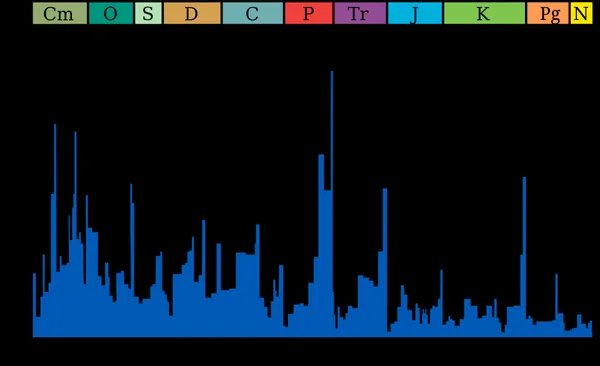
The Capitanian mass extinction event began around 262 million years ago with its most intense pulse peaking at 259 million years ago, marking the end of the Capitanian stage and Guadalupian (Middle Permian) epoch of the Permian. Historically conflated with the better-known Permian–Triassic extinction, it was only recognised as a distinct event in 1994. Despite this, the mass extinction is believed to be the third-largest of the Phanerozoic in terms of the percentage of genera (33–35%) and species (60–63%) lost after the end-Permian and Late Ordovician mass extinction, while being the fifth worst in terms of ecological severity. The global nature of the Capitanian mass extinction has been called into question by some palaeontologists as a result of some analyses finding it to have affected only low-latitude taxa in the Northern Hemisphere.
Also on this shelf
Harrat Rahat.
Himalayan salt.
See also
Uncatalogued shelfText from Wikipedia; plate via Wikimedia Commons. Text CC BY-SA 4.0; plate freely licensed (see Commons). Source record. Images and catalogue data are reproduced from open-access collections.