Geology and Minerals
Big Thicket
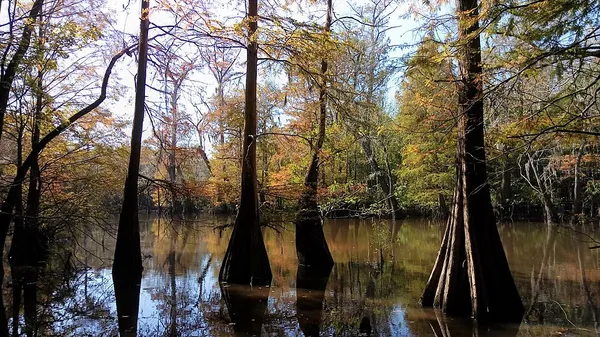
The Big Thicket is the name given to a somewhat imprecise region of a heavily forested area of Southeast Texas in the United States. This area represents a portion of the mixed pine-hardwood forests or "Piney Woods" of the Southeast US. The National Park Service established the Big Thicket National Preserve (BTNP) within the region in 1974 and it is recognized as a biosphere reserve by UNESCO. Although the diversity of animals in the area is high for a temperate zone with over 500 vertebrates, it is the complex mosaic of ecosystems and plant diversity that is particularly remarkable. Biologists have identified at least eight, and up to eleven, ecosystems in the Big Thicket area. More than 160 species of trees and shrubs, 800 herbs and vines, and 340 types of grasses are known to occur in the Big Thicket, and estimates as high as over 1000 flowering plant species and 200 trees and shrubs have been made, plus ferns, carnivorous plants, and more. The Big Thicket has historically been the most dense forest region in Texas. Existing literature states that Native Americans were known to have lived and hunted in the area nomadically, but did not establish permanent settlements there before the Alabama–Coushatta settled in the northeast about 1780. However, there is insufficient archaeological evidence to support this claim. What records that do exist could suggest human occupation dating back to the Clovis culture 13,400–12,700 years ago, with numerous era diagnostic points being found in all but one of the counties commonly considered to be in the Big Thicket. Spanish explorers and missionaries had a sporadic presence in the region, however colonization and settlement was not their aim, preferring to establish forts outside of the Region where the French were encroaching from the east (namely around Natchitoches, Nacogdoches, and the lower Trinity river valley). After the 13th Amendment to the U.S. Constitution was officially ratified and adopted in late 1865, “Emancipated people settled in the Big Thicket and survived off the land, using the woods of southeast Texas for homesteading, hunting, and foraging.” Logging in the late 19th and 20th centuries dramatically reduced the forest concentration.
Also on this shelf
Kasatochi Island.
Haug Range.
See also
Uncatalogued shelfText from Wikipedia; plate via Wikimedia Commons. Text CC BY-SA 4.0; plate freely licensed (see Commons). Source record. Images and catalogue data are reproduced from open-access collections.