Geology and Minerals
1883 eruption of Krakatoa
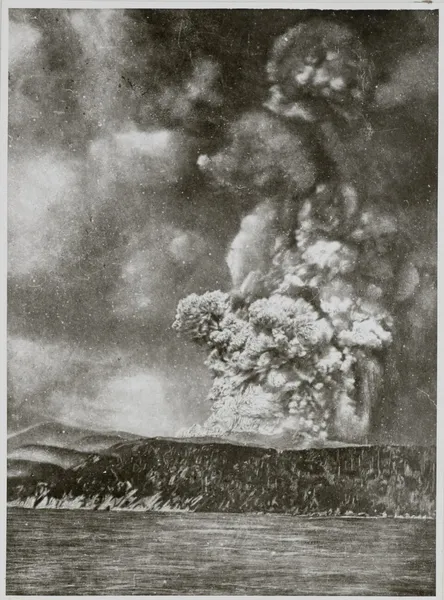
Between 19 May and 21 October 1883, the volcanic island of Krakatoa (located in the Sunda Strait, then part of the Dutch East Indies—modern-day Indonesia) began erupting, lasting more than five months. On 27 August, the island had its most significant eruption, which destroyed over 70% of the island and its surrounding archipelago, the island collapsing into a caldera. The eruption of 27 August had an estimated volcanic explosivity index of 6, and is one of the deadliest and most destructive volcanic events in recorded history; the third explosion of that day, that occurred at 10:02 a.m., remains the loudest-known sound in history. The explosion was heard 3,110 kilometres (1,930 mi) away in Perth, Western Australia, and Rodrigues near Mauritius, 4,800 kilometres (3,000 mi) away. The acoustic pressure wave circled the globe more than three times. At least 36,417 deaths are attributed to the eruption and the tsunamis it created. Significant additional effects were felt worldwide in the days and weeks after the volcano's eruption. Additional seismic activity was reported until February 1884, but any reports after October 1883 were dismissed by Rogier Verbeek's subsequent investigation into the eruption.
Also on this shelf
Komi Republic.
Lawrence Alexander Hardie.
See also
Uncatalogued shelfText from Wikipedia; plate via Wikimedia Commons. Text CC BY-SA 4.0; plate freely licensed (see Commons). Source record. Images and catalogue data are reproduced from open-access collections.