Geology and Minerals
Duchesne River Formation
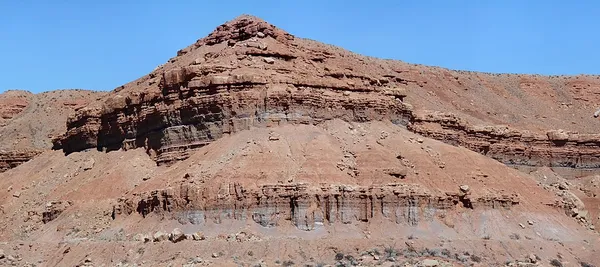
The Duchesne River Formation is a Middle Eocene geologic formation in the Uinta Basin of northeastern Utah. It was originally named the Duchesne Formation by Carnegie Museum paleontologist O.A. Peterson, and modified to the Duchesne River Formation by Carnegie Museum paleontologist J.L. Kay, because the term Duschesne Formation was already in use for a Jurassic limestone. Peterson did not provide a type section when naming the formation, only noting that it is named for the Duchesne River, which flows roughly southeast and east to join the Green River. The formation consists of over 3000 feet (915 m) of fluvial (river-carried) conglomerate, sandstone and fine-grained sedimentary rocks. It is subdivided into four members (below), whose sediments are thought to have eroded from the rising Uinta Mountains to the north and deposited in rivers, floodplains and small lakes.
Also on this shelf
Alvão Natural Park.
Cave.
See also
Uncatalogued shelfText from Wikipedia; plate via Wikimedia Commons. Text CC BY-SA 4.0; plate freely licensed (see Commons). Source record. Images and catalogue data are reproduced from open-access collections.