Geology and Minerals
Geology of the Pacific Northwest
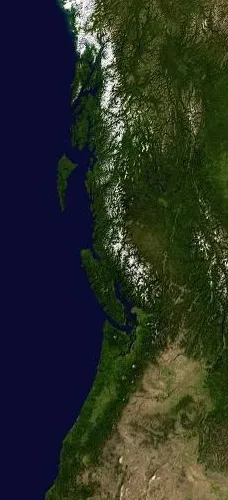
The geology of the Pacific Northwest includes the composition (including rock, minerals, and soils), structure, physical properties and the processes that shape the Pacific Northwest region of North America. The region is part of the Ring of Fire: the subduction of the Pacific and Farallon Plates under the North American Plate is responsible for many of the area's scenic features as well as some of its hazards, such as volcanoes, earthquakes, and landslides. The geology of the Pacific Northwest is vast and complex. Most of the region began forming about 200 million years ago as the North American Plate started to drift westward during the rifting of Pangaea. Since that date, the western edge of North America has grown westward as a succession of island arcs and assorted ocean-floor rocks have been added along the continental margin. There are at least five geologic provinces in the area: the Cascade Volcanoes, the Columbia Plateau, the North Cascades, the Coast Mountains, and the Insular Mountains. The Cascade Volcanoes are an active volcanic region along the western side of the Pacific Northwest. The Columbia Plateau is a region of subdued geography that is inland of the Cascade Volcanoes, and the North Cascades are a mountainous region in the northwest corner of the United States, extending into British Columbia. The Coast Mountains and Insular Mountains are a strip of mountains along the coast of British Columbia, each with its own geological history.
Also on this shelf
Chuska Mountains.
Greenhorn Limestone.
See also
Uncatalogued shelfText from Wikipedia; plate via Wikimedia Commons. Text CC BY-SA 4.0; plate freely licensed (see Commons). Source record. Images and catalogue data are reproduced from open-access collections.