Geology and Minerals
Ignimbrite
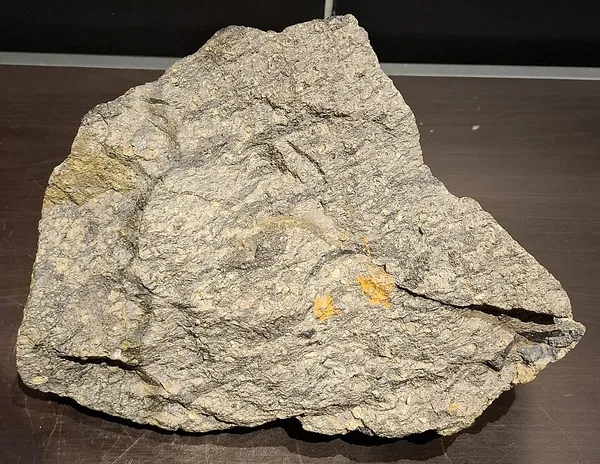
Ignimbrite is a type of volcanic rock, consisting of a typically welded tuff. Ignimbrites form from the deposits of pyroclastic flows, which are a hot suspension of particles and gases flowing rapidly from a volcano, driven by being denser than the surrounding atmosphere. New Zealand geologist Patrick Marshall (1869–1950) coined the term ignimbrite from the Latin igni- [fire] and imbri- [rain]. Ignimbrites are made of a very poorly sorted mixture of volcanic ash (or tuff when lithified) and pumice and/or scoria lapilli, commonly with scattered lithic fragments. The ash is composed of glass shards and crystal fragments. Ignimbrites may be fairly loose and unconsolidated, or a poor to strongly lithified (solidified) rock called lapilli tuff. Near the volcanic source, ignimbrites often contain thick accumulations of lithic blocks, and distally, many show meter-thick accumulations of rounded cobbles of pumice. Ignimbrites may be white, grey, pink, beige, brown, or black depending on their composition and density. Many pale ignimbrites are dacitic or rhyolitic. Darker-coloured ignimbrites may be densely welded volcanic glass or, less commonly, mafic in composition.
Also on this shelf
Laurie Island.
Conguillío National Park.
See also
Uncatalogued shelfText from Wikipedia; plate via Wikimedia Commons. Text CC BY-SA 4.0; plate freely licensed (see Commons). Source record. Images and catalogue data are reproduced from open-access collections.