Geology and Minerals
Clay chemistry
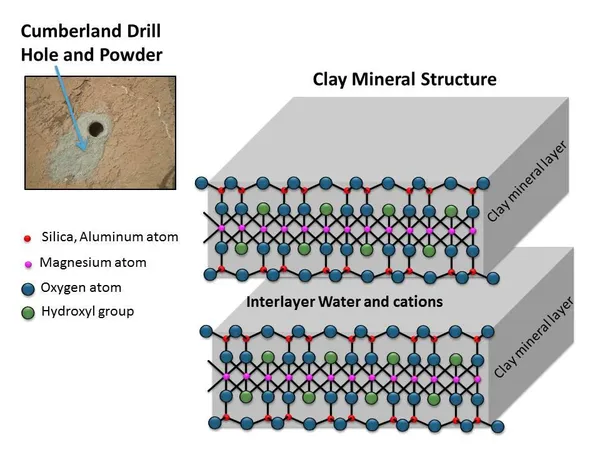
Clay chemistry is an applied subdiscipline of chemistry which studies the chemical structures, properties and reactions of or involving clays and clay minerals. It is a multidisciplinary field, involving concepts and knowledge from inorganic and structural chemistry, physical chemistry, materials chemistry, analytical chemistry, organic chemistry, mineralogy, geology and others. The study of the chemistry (and physics) of clays and clay minerals is of great academic and industrial relevance as they are among the most widely used industrial minerals, being employed as raw materials (ceramics, pottery, etc.), adsorbents, catalysts, additives, mineral charges, medicines, building materials and others. The unique properties of clay minerals including: nanometric scale layered construction, presence of fixed and interchangeable charges, possibility of adsorbing and hosting (intercalating) molecules, ability of forming stable colloidal dispersions, possibility of tailored surface and interlayer chemical modification and others, make the study of clay chemistry a very important and extremely varied field of research. Many distinct fields and knowledge areas are impacted by the physico-chemical behavior of clay minerals, from environmental sciences to chemical process engineering, from pottery to nuclear waste management. Their cation exchange capacity (CEC) is of great importance in the balance of the most common cations in soil (Na+, K+, NH4+, Ca2+, Mg2+) and pH control, with direct impact on the soil fertility. It also plays an important role in the fate of most Ca2+ arriving from land (river water) into the seas. The ability to change and control the CEC of clay minerals offers a valuable tool in the development of selective adsorbents with applications as varied as chemical sensors or pollution cleaning substances for contaminated water, for example. The understanding of the reactions of clay minerals with water (intercalation, adsorption, colloidal dispersion, etc.) are indispensable for the ceramic industry (plasticity and flow control of ceramic raw mixtures, for example).
Also on this shelf
Cave of El Soplao.
Facies.
See also
Uncatalogued shelfText from Wikipedia; plate via Wikimedia Commons. Text CC BY-SA 4.0; plate freely licensed (see Commons). Source record. Images and catalogue data are reproduced from open-access collections.