Geology and Minerals
Haruj
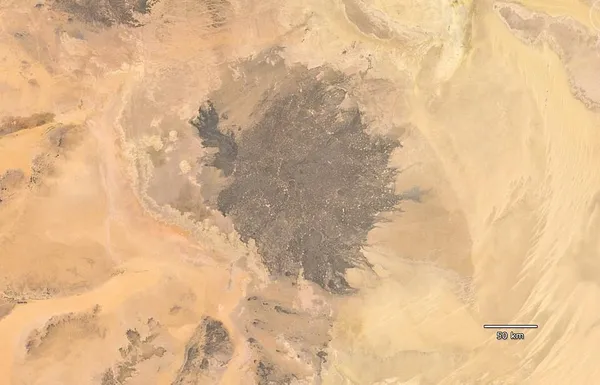
Haruj (Arabic: هروج, also known as Haroudj) is a large volcanic field spread across 42,000–45,000 km2 (16,000–17,000 sq mi) in central Libya. It is one of several volcanic fields in Libya along with Tibesti, and its origin has been attributed to the effects of geologic lineaments in the crust. It contains about 150 volcanoes, including numerous basaltic scoria cones and about 30 small shield volcanoes, along with craters and lava flows. Most of the field is covered by lava flows that originated in fissure vents; the rest of the flows originated within small shield volcanoes, stratovolcanoes and scoria cones. Some of these vents have large craters. Volcanism in Haruj blocked ancient rivers and led to the formation of Lake Megafezzan. Volcanic activity in Haruj began about 6 million years ago and continued into the late Pleistocene. A number of individual lava flow generations were emplaced in the Haruj volcanic field, the most recent ones in the Holocene 2,310 ± 810 years ago. There are reports of solfataric activity.
Also on this shelf
Chatham County, North Carolina.
Ebeko.
See also
Uncatalogued shelfText from Wikipedia; plate via Wikimedia Commons. Text CC BY-SA 4.0; plate freely licensed (see Commons). Source record. Images and catalogue data are reproduced from open-access collections.