Geology and Minerals
Impact crater
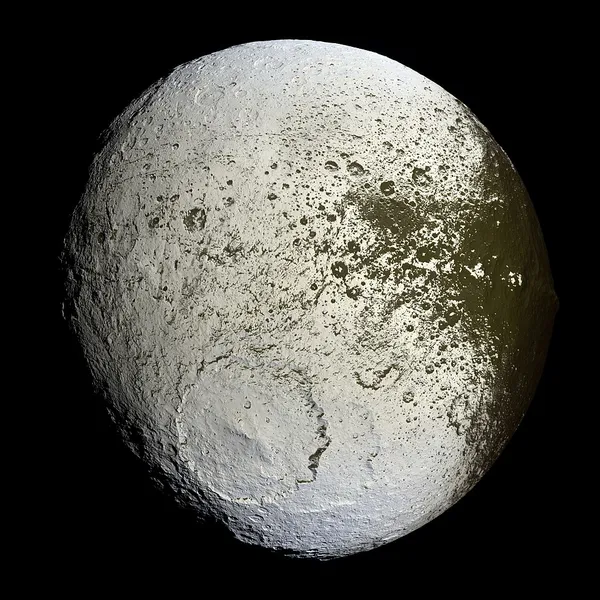
An impact crater is a depression in the surface of a solid astronomical body formed by the hypervelocity impact of a smaller object. In contrast to volcanic craters, which result from explosion or internal collapse, impact craters typically have raised rims and floors that are lower in elevation than the surrounding terrain. Impact craters are typically circular, though they can be elliptical in shape or even irregular due to events such as landslides. Impact craters range in size from microscopic craters seen on lunar rocks returned by the Apollo Program to simple bowl-shaped depressions and vast, complex, multi-ringed impact basins. Meteor Crater is a well-known example of a small impact crater on Earth. Impact craters are the dominant geographic features on many solid Solar System objects including the Moon, Mercury, Callisto, Ganymede, and most small moons and asteroids. On other planets and moons that experience more active surface geological processes, such as Earth, Venus, Europa, Io, Titan, and Triton, visible impact craters are less common because they become eroded, buried, or transformed by tectonic and volcanic processes over time. Where such processes have destroyed most of the original crater topography, the terms impact structure or astrobleme are more commonly used. In early literature, before the significance of impact cratering was widely recognised, the terms cryptoexplosion or cryptovolcanic structure were often used to describe what are now recognised as impact-related features on Earth. The cratering records of very old surfaces, such as Mercury, the Moon, and the southern highlands of Mars, record a period of intense early bombardment in the inner Solar System around 3.9 billion years ago. The rate of crater production on Earth has since been considerably lower, but it is appreciable nonetheless. Earth experiences, on average, from one to three impacts large enough to produce a 20-kilometre-diameter (12 mi) crater every million years. This indicates that there should be far more relatively young craters on the planet than have been discovered so far. The cratering rate in the inner solar system fluctuates as a consequence of collisions in the asteroid belt that create a family of fragments that are often sent cascading into the inner solar system.
Also on this shelf
Diatomaceous earth.
Gruta de Maquiné.
See also
Uncatalogued shelfText from Wikipedia; plate via Wikimedia Commons. Text CC BY-SA 4.0; plate freely licensed (see Commons). Source record. Images and catalogue data are reproduced from open-access collections.