Geology and Minerals
Dinosaur egg
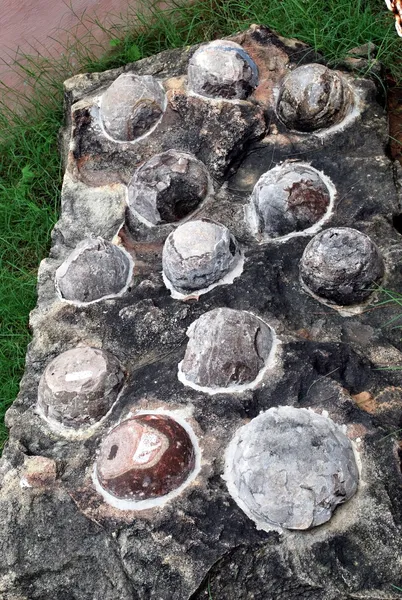
Dinosaur eggs are the organic vessels in which a dinosaur embryo develops. When the first scientifically documented remains of non-avian dinosaurs were being described in England during the 1820s, it was presumed that dinosaurs had laid eggs because they were reptiles. In 1859, the first scientifically documented dinosaur egg fossils were discovered in France by Jean-Jacques Pouech, although they were mistaken for giant bird eggs (birds were not yet recognized as dinosaurs at the time). The first scientifically recognized non-avian dinosaur egg fossils were discovered in 1923 by an American Museum of Natural History crew in Mongolia. Dinosaur eggshell can be studied in thin section and viewed under a microscope. The interior of a dinosaur egg can be studied using CAT scans or by gradually dissolving away the shell with acid. Sometimes the egg preserves the remains of the developing embryo inside. The oldest known dinosaur eggs and embryos are from Massospondylus, which lived during the Early Jurassic, about 190 million years ago.
Also on this shelf
Colloid.
Flint.
See also
Uncatalogued shelfText from Wikipedia; plate via Wikimedia Commons. Text CC BY-SA 4.0; plate freely licensed (see Commons). Source record. Images and catalogue data are reproduced from open-access collections.