Geology and Minerals
Hōei eruption
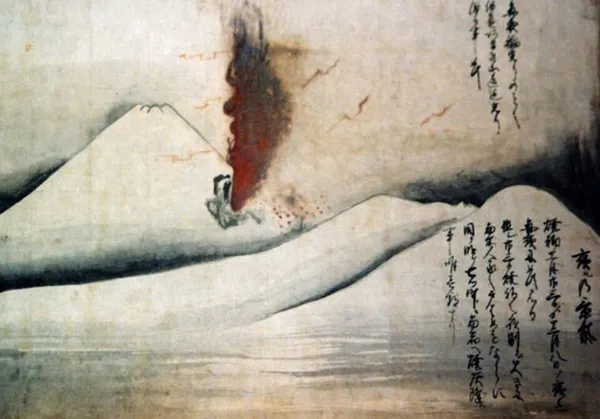
The Hōei eruption (Japanese: 宝永大噴火, Hōei daifunka) of Mount Fuji started on December 16, 1707 (during the Hōei era, 23rd day of the 11th month of the 4th year) and ended on February 24, 1708. It was the last confirmed eruption of Mount Fuji, with three unconfirmed eruptions reported from 1708 to 1854. The eruption took place during the reign of Emperor Higashiyama and the Shogun was Tokugawa Tsunayoshi. It is well known for the immense ash-fall it produced over eastern Japan and subsequent landslides and starvation across the country. Hokusai's One Hundred Views of Mount Fuji includes an image of the small crater at a secondary eruption site on the southwestern slope. The area where the eruption occurred is called Mount Hōei because it occurred in the fourth year of the Hōei era. Today, the crater of the main eruption can be visited from the Fujinomiya or Gotemba Trails on Mount Fuji.
Also on this shelf
Clevelin Hills.
Breccia Peak (Wyoming).
See also
Uncatalogued shelfText from Wikipedia; plate via Wikimedia Commons. Text CC BY-SA 4.0; plate freely licensed (see Commons). Source record. Images and catalogue data are reproduced from open-access collections.