Geology and Minerals
Eoarchean geology
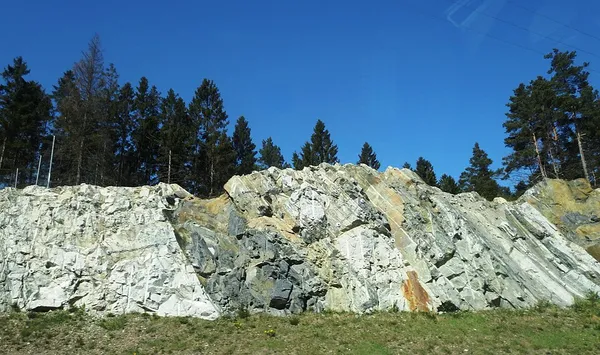
Eoarchean geology is the study of the oldest preserved crustal fragments of Earth during the Eoarchean era from 4.031 to 3.6 billion years ago. Major well-preserved rock units dated to this era are known from three localities, the Isua Greenstone Belt in Southwest Greenland, the Acasta Gneiss in the Slave Craton in Canada, and the Nuvvuagittuq Greenstone Belt on the eastern coast of Hudson Bay in Quebec. From the dating of rocks in these three regions, scientists suggest that the beginning of plate tectonics could have started as far back as early as the Eoarchean. All three regions contain an abundance of Archean felsic volcanic rocks, including tonalite, trondhjemite and granodiorite (TTG) series rocks, with minor granulite to amphibolite facies gneiss complexes, which means that the original characters of the rocks has been disturbed by at least one ductile deformation at deep crustal conditions. Eoarchean geology is important in investigating Earth's tectonic history. It is because the planet had just undergone a transformation to the present-day-similar convective mode and lithosphere from a magma ocean in Hadean Eon, to either a protoplate tectonics or an unstable stagnant lithosphere lid at its infant stages. The earth's condition during Archean to Proterozoic (including Eoarchean era) serves as a crucial linkage between Hadean magma ocean to present-day plate tectonics. Various interpretations have been suggested to explain the prevalent tectonic style corresponding to Eoarchean geology. However it can be, in general, classified into two tectonic models, which are vertical tectonics and plate tectonics. Explanation of the release of large amount of mantle heat is the prominent concern. Most of the evidences shows a probability that pre-plate tectonics dominantly involved intense surface volcanism, active magmatism and crustal recycling.
Also on this shelf
Geology of Croatia.
Fissure vent.
See also
Uncatalogued shelfText from Wikipedia; plate via Wikimedia Commons. Text CC BY-SA 4.0; plate freely licensed (see Commons). Source record. Images and catalogue data are reproduced from open-access collections.