Geology and Minerals
Dorfopterus
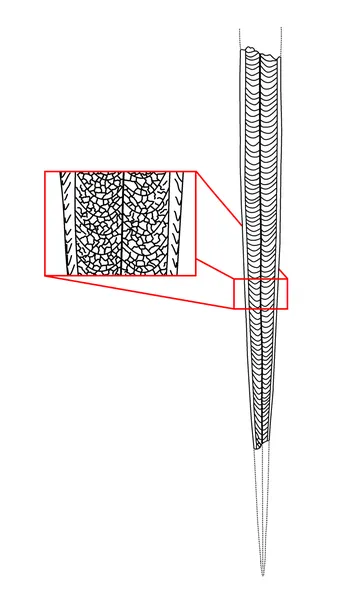
Dorfopterus is a genus of extinct invertebrate, possibly an eurypterid. Only one fossil of the single and type species, D. angusticollis, has been discovered in deposits of the Early Devonian period (Emsian stage) in the Beartooth Butte Formation in Wyoming, in the United States. The first half of the name of the genus honors the discoverer of this formation, Erling Dorf, while the second half consists in the Ancient Greek word πτερόν (pteron), meaning "wing". The species name angusticollis is composed of the Latin words angustus ("narrow") and collum ("neck"). The only known specimen of Dorfopterus consists of an incomplete uncrushed telson (the posteriormost division of the body), which was long, narrow, styliform and with a central carina ("keel"). It had a special ornamentation consisting of rib-like curved lines on each side of the telson with reticulated (net-like) patterns between them. This ornamentation was unique, and was not known to have occurred in any other eurypterid at the time of the specimen's discovery. Originally described as part of Stylonuridae by the American paleontologist Erik Norman Kjellesvig-Waering in 1955, the strange morphology and the little known fossil material of Dorfopterus have made the classification of this genus problematic. Currently, it is considered as incertae sedis (a taxon with unclear relationships) within Eurypterida, although Dorfopterus being a eurypterid at all has also been questioned. The locality in which Dorfopterus was found, the Beartooth Butte Formation, is home to fossils of many fish, plants and a few other eurypterids. The genus is believed to have lived in an estuarine inland channel.
Also on this shelf
Chorochromatic map.
Bog iron.
See also
Uncatalogued shelfText from Wikipedia; plate via Wikimedia Commons. Text CC BY-SA 4.0; plate freely licensed (see Commons). Source record. Images and catalogue data are reproduced from open-access collections.