Geology and Minerals
Fission track dating
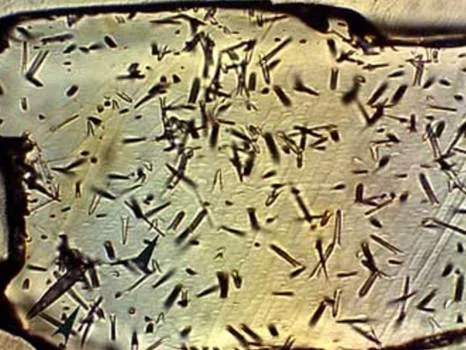
Fission track dating is a radiometric dating technique based on analyses of the damage trails, or tracks, left by fission fragments in certain uranium-bearing minerals and glasses. Fission-track dating is a relatively simple method of radiometric dating that has made a significant impact on understanding the thermal history of continental crust, the timing of volcanic events, and the source and age of different archeological artifacts. The method involves using the number of fission events produced from the spontaneous decay of uranium-238 in common accessory minerals to date the time of rock cooling below closure temperature. Fission tracks are sensitive to heat, and therefore the technique is useful at unraveling the thermal evolution of rocks and minerals. Most current research using fission tracks is aimed at: a) understanding the evolution of mountain belts; b) determining the source or provenance of sediments; c) studying the thermal evolution of basins; d) determining the age of poorly dated strata; and e) dating and provenance determination of archeological artifacts. In the 1930s it was discovered that uranium (specifically uranium-235) would undergo fission when struck by neutrons. This caused damage tracks in solids which could be revealed by chemical etching.
Also on this shelf
Kurile Lake.
2017 in paleontology.
See also
Uncatalogued shelfText from Wikipedia; plate via Wikimedia Commons. Text CC BY-SA 4.0; plate freely licensed (see Commons). Source record. Images and catalogue data are reproduced from open-access collections.