Geology and Minerals
Belt Supergroup
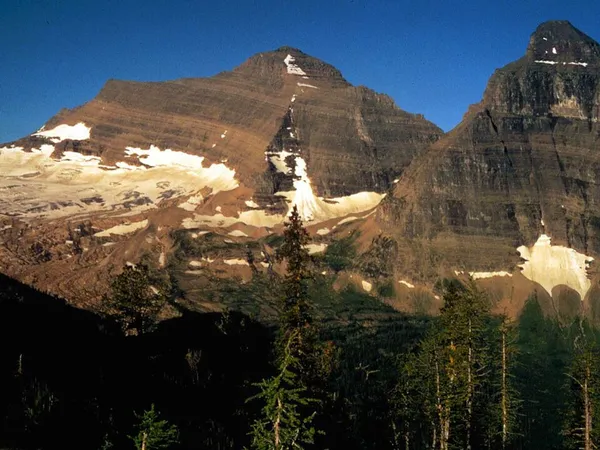
The Belt Supergroup is an assemblage of primarily fine-grained sedimentary rocks and mafic intrusive rocks of late Precambrian (Mesoproterozoic) age. It is more than 15 kilometres (10 mi) thick, covers an area of some 200,000 km2 (77,220 sq. mi), and is considered to be one of the world's best-exposed and most accessible sequences of Mesoproterozoic rocks. It was named after the Big Belt Mountains in west-central Montana. It is present in western Montana and northern Idaho, with minor occurrences in northeastern Washington and western Wyoming. It extends into Canada where the equivalent rocks, which are called the Purcell Supergroup, are exposed in southeastern British Columbia and southwestern Alberta. The rocks of the Belt Supergroup contain economically significant deposits of lead, zinc, silver, copper, gold, and other metals in a number of areas, and some of the Belt rocks contain fossil stromatolites. Spectacular outcrops of Belt rocks can be seen in Glacier National Park in northwestern Montana and in Waterton Lakes National Park in southwestern Alberta.
Also on this shelf
Geology of solar terrestrial planets.
Alum Bay.
See also
Uncatalogued shelfText from Wikipedia; plate via Wikimedia Commons. Text CC BY-SA 4.0; plate freely licensed (see Commons). Source record. Images and catalogue data are reproduced from open-access collections.