Geology and Minerals
Katla (volcano)
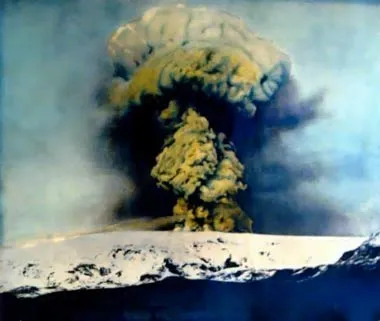
Katla (Icelandic pronunciation: [ˈkʰahtla] ) is an active subglacial volcano in southern Iceland. This volcano has been very active historically with at least twenty documented major eruptions since 2920 BC. In its recent history though, Katla has been less active as the last major eruption occurred in 1918. These eruptions have had a Volcanic Explosivity Index (VEI) of between 4 and 5 on a scale of 0 to 8. In comparison, the 2010 Eyjafjallajökull eruption had a VEI of 4. Larger VEI-5 eruptions are comparable to Mount St. Helens 1980 eruption. These eruptions have produced very large glacial outburst floods. Several smaller (minor) events measuring VEI-1 and below have occurred since. Katla is one of the largest volcanic sources of carbon dioxide (CO2) on Earth, accounting for up to 4% of total global volcanic carbon dioxide emissions.
Also on this shelf
Geology of New England.
Bauxite mining in the United States.
See also
Uncatalogued shelfText from Wikipedia; plate via Wikimedia Commons. Text CC BY-SA 4.0; plate freely licensed (see Commons). Source record. Images and catalogue data are reproduced from open-access collections.