Geology and Minerals
Apataelurus
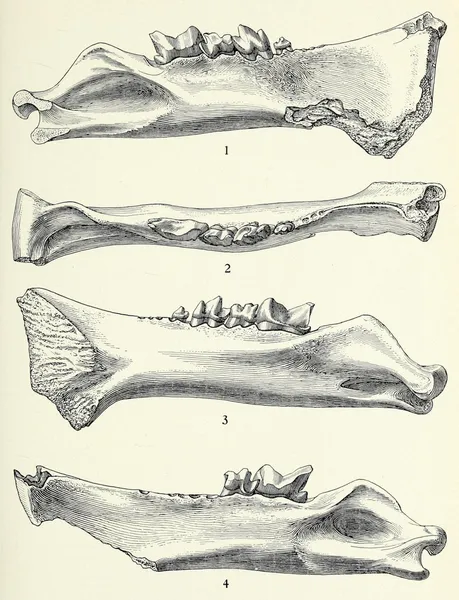
Apataelurus ("false cat") is an extinct genus of saber-toothed mammals from the extinct family Oxyaenidae, that lived in North America and East Asia during the Middle Eocene, 45-42 million years ago. This genus was defined by teeth that were well-adapted to a carnivorous diet. A distinct feature described was a long upper canine tooth that resembled a saber tooth. There are two species currently described: Apataelurus kayi, the type species, and Apataelurus pishigouensis, discovered in 1986. As a large, leopard-sized predator, Apataelurus dominated the Uinta Formation area. It was adapted to taking on large prey with more motion-tolerant muscles in its mouth, allowing it to attack large prey that would struggle or fight back. Apataelurus was closely related to other members of Machaeroidinae, such as Diegoaelurus vanvalkenburghae. Apataelurus was a more derived member of Oxyaenidae, and lived in the middle to late Lutetian age. Apataelurus and other species within the Uinta Basin emerged during a major transitional period between the reduction in tropical zones and the increase in temperate and subtropical biomes.
Also on this shelf
Doug Burgum.
Earth science.
See also
Uncatalogued shelfText from Wikipedia; plate via Wikimedia Commons. Text CC BY-SA 4.0; plate freely licensed (see Commons). Source record. Images and catalogue data are reproduced from open-access collections.