Geology and Minerals
19th century in ichnology
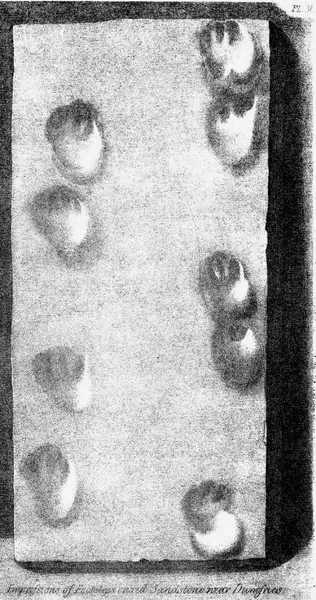
The 19th century in ichnology refers to advances made between the years 1800 and 1899 in the scientific study of trace fossils, the preserved record of the behavior and physiological processes of ancient life forms, especially fossil footprints. The 19th century was notably the first century in which fossil footprints received scholarly attention. British paleontologist William Buckland performed the first true scientific research on the subject during the early 1830s. A slab of Permian-aged sandstone had been discovered in Scotland which preserved a series of unusual footprints. After acquiring the specimen, Buckland experimented with modern animals to ascertain the trackmaker and concluded that the Scottish footprints were made by tortoises. Later in the century famed advocate of evolution Thomas Henry Huxley would refute this attribution and these footprints, called Chelichnus, would remain without an identified trackmaker until scientists recognized that they were actually made by an evolutionary precursor to mammals. The 1830s also saw the discovery and investigation of unusual hand-shaped footprints from Triassic rocks in Germany that were later named Chirotherium. The identification of the Chirotherium trackmaker proved elusive and suggestions from researchers included everything from monkeys to giant toads and kangaroos. Chirotherium proved to be an enduring ichnological mystery that would not be solved until long into the 20th century. Some of the most important ichnological research of the 19th century occurred across the Atlantic in the United States. Dinosaur footprints were first discovered there in 1802 when a Massachusetts farm boy stumbled upon bird-like footprints in sandstone that the local clergy mistakenly attributed to the raven that Noah released from his ark during the Biblical Flood. The region's footprints came to the attention of scholars during the mid 1830s when further bird-like dinosaur tracks were discovered elsewhere in the state. These became the lifelong preoccupation of prominent ichnologist Edward Hitchcock. Hitchcock thought the tracks were made by giant flightless birds. Late in the 19th century prisoners in Nevada discovered a major Ice Age track site at what was once an ancient lake shore.
Also on this shelf
Aquia Formation.
Diatom.
See also
Uncatalogued shelfText from Wikipedia; plate via Wikimedia Commons. Text CC BY-SA 4.0; plate freely licensed (see Commons). Source record. Images and catalogue data are reproduced from open-access collections.