Geology and Minerals
Bothriolepis
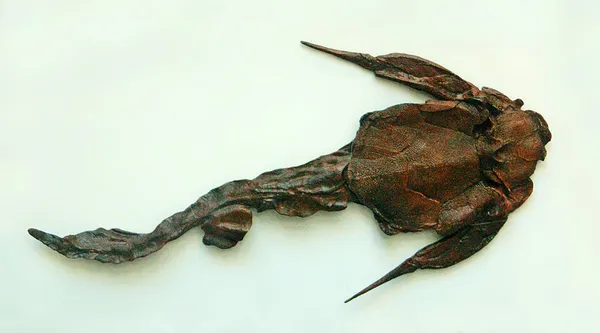
Bothriolepis (from Greek: βόθρος bóthros, 'trench' and Greek: λεπίς lepis 'scale') was a widespread, abundant and diverse genus of antiarch placoderms that lived during the Middle to Late Devonian period of the Paleozoic Era. Historically, Bothriolepis resided in an array of paleo-environments spread across every paleocontinent, including near shore marine and freshwater settings. Most species of Bothriolepis were characterized as relatively small, benthic, freshwater detritivores (organisms that obtain nutrients by consuming decomposing plant/animal material), averaging around 30 centimetres (12 in) in length. However, the largest species, B. rex, had an estimated bodylength of 170 centimetres (67 in). Although expansive with over 60 species found worldwide, comparatively Bothriolepis is not unusually more diverse than most modern bottom dwelling species around today.
Also on this shelf
Geology of the Zion and Kolob canyons area.
Lava lake.
See also
Uncatalogued shelfText from Wikipedia; plate via Wikimedia Commons. Text CC BY-SA 4.0; plate freely licensed (see Commons). Source record. Images and catalogue data are reproduced from open-access collections.