Geology and Minerals
Economy of South Africa
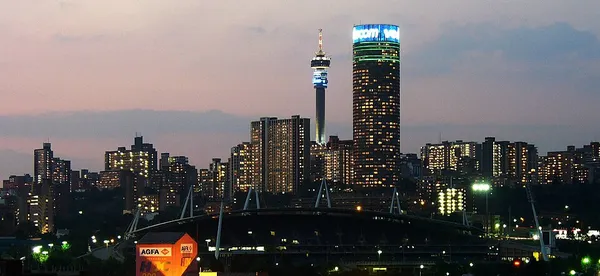
South Africa has a developing economy considered upper-middle income. It has the largest economy in Africa as of 2026. It is also the continent's most industrialised, diversified and technologically advanced economy. South Africa is a leading middle power in international relations. Johannesburg is South Africa’s primary economic and financial centre, contributing about 16% of the country's gross domestic product and roughly 40% of Gauteng’s total economic output. Cape Town, the nation's second-largest city by population, serves as Africa's tech hub, has a large startup community, and is popular among digital nomads. The city is home to hundreds of tech firms, and is referred to as the "Startup Capital of Africa". Although the natural resource extraction industry remains one of the largest in the country with an annual contribution to the GDP of US$13.5 billion, the economy of South Africa has diversified since the end of apartheid, particularly towards services. In 2019, the financial industry contributed US$41.4 billion to South Africa's GDP. In 2021, South Africa-based financial institutions managed more than US$1.41 trillion in assets. The total market capitalisation of the Johannesburg Stock Exchange is US$1.28 trillion as of October 2021. South Africa's banking sector was rated as a strongly positive feature of the country's economy. The nation is among the G20, and is the only African country that is a permanent member of the group. In 2020, South Africa's metropolitan areas (metros), such as Cape Town, Durban, and Johannesburg, accounted for 57% of the country's total economic activity.
Also on this shelf
Geology of the Lake District.
Bristol Lake.
See also
Uncatalogued shelfText from Wikipedia; plate via Wikimedia Commons. Text CC BY-SA 4.0; plate freely licensed (see Commons). Source record. Images and catalogue data are reproduced from open-access collections.