Geology and Minerals
Ironstone mining in Rosedale
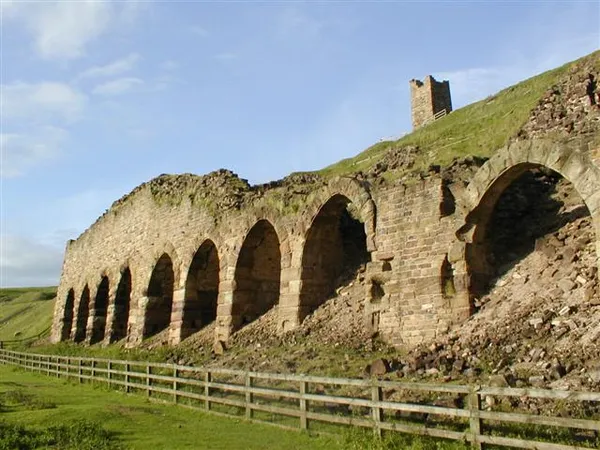
The Ironstone mining in Rosedale, was a major mining concern, in Rosedale, North Yorkshire, England. It flourished in the 19th century and ceased in the early 20th, though smaller scale iron workings were in use through the Middle Ages. The ironstone from Rosedale was typically rated at a higher iron ore concentration in the rock than other mines in the Cleveland and North Yorkshire area. The first exports from the dale were by horse and cart, but by 1861, the standard gauge Rosedale Railway was built, 12 miles (19 km) across the moors to the north to connect the mines with the smelters on Teesside, Tyneside or in County Durham. As the industrialisation of the dale increased, many people moved in to get jobs in the mines, changing the dale from one predominantly dedicated to agriculture, to one geared up to mining. This rush led the local population to refer to the new mining venture as the Yorkshire Klondyke. The mines closed down from the 1880s onwards, and all mining activity had ceased by 1929, which led to the closure of the railway.
Also on this shelf
Chantilly, Oise.
Greater Sudbury.
See also
Uncatalogued shelfText from Wikipedia; plate via Wikimedia Commons. Text CC BY-SA 4.0; plate freely licensed (see Commons). Source record. Images and catalogue data are reproduced from open-access collections.