Geology and Minerals
Colophonite
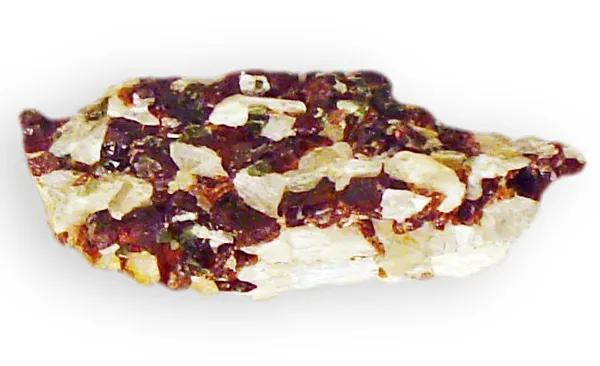
Colophonite, less commonly kalophonit (from Ancient Greek: κολοφωνία, kolophonia, rosin or rosin colors) — an obsolete historical name for a brownish calcium-iron mineral of the garnet family, a variety of grossular (later, andradite), discovered as an associated metamorphic mineral in the iron ore mines of the southern Norwegian islands, primarily Tromøya (near Arendal). It is a nesosilicate, with formula Ca3Fe3+2(SiO4)3. Other names for colophonite: resin garnet (French: Grenat résinite), calderite, rosin garnet. Versions of the mineral composition and classification of colophonite differed at different times, although in the most general sense it was always classified as a member of the garnet group mined in Europe. At one time it was considered a brown ("rosin" in color) variety of grossular, then it was classified as a variety of andradite. Due to the low quality and transparency of the crystals, colophonite was very rarely used for jewelry or even ornamental purposes, although it was valued in mineralogical collections. By the middle of the 20th century, this name ceased to be used in mineralogy as relevant, and jewelers began to consider colophonite as a kind of historical synonym for hessonite.
Also on this shelf
Faial Island.
Cape Kiwanda State Natural Area.
See also
Uncatalogued shelfText from Wikipedia; plate via Wikimedia Commons. Text CC BY-SA 4.0; plate freely licensed (see Commons). Source record. Images and catalogue data are reproduced from open-access collections.