Geology and Minerals
Iron cycle
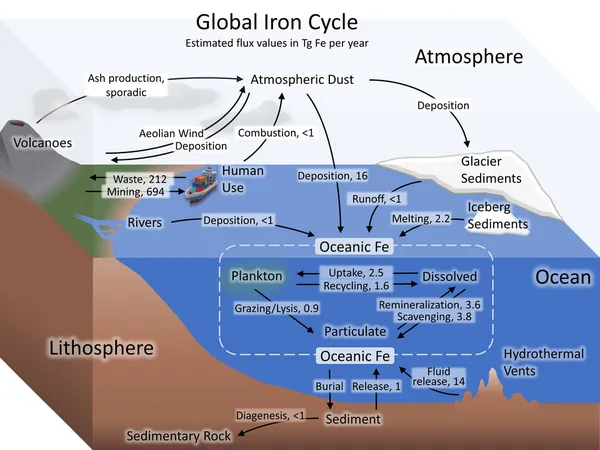
The iron cycle (Fe) is the biogeochemical cycle of iron through the atmosphere, hydrosphere, biosphere and lithosphere. While Fe is highly abundant in the Earth's crust, it is less common in oxygenated surface waters. Iron is a key micronutrient in primary productivity, and a limiting nutrient in the Southern ocean, eastern equatorial Pacific, and the subarctic Pacific referred to as High-Nutrient, Low-Chlorophyll (HNLC) regions of the ocean. Iron can exist in a range of oxidation states from −2 to +7; however, on Earth it is predominantly in its +2 or +3 redox state. It is a primary redox-active metal in nature. The cycling of iron between its +2 and +3 oxidation states is referred to as the iron cycle. This process can be entirely abiotic or facilitated by microorganisms, especially iron-oxidizing bacteria. The abiotic processes include the rusting of metallic which, in addition to oxidation of the metal, involves oxidation of Fe(II) in the presence of oxygen. Another type of abiotic process is the reduction of Fe3+ to Fe2+ by sulfide minerals. The biological cycling of Fe2+ is mediated by iron oxidizing and reducing microbes. Iron is an essential micronutrient for life form. It is a key component of hemoglobin, important to nitrogen fixation as part of the Nitrogenase enzyme family, and as part of the iron-sulfur core of ferredoxin it facilitates electron transport in chloroplasts, eukaryotic mitochondria, and bacteria. Due to the high reactivity of Fe2+ with oxygen and low solubility of Fe3+, iron is a limiting nutrient in most regions of the world.
Also on this shelf
Arbuckle Mountains.
Horomatangi Reef.
See also
Uncatalogued shelfText from Wikipedia; plate via Wikimedia Commons. Text CC BY-SA 4.0; plate freely licensed (see Commons). Source record. Images and catalogue data are reproduced from open-access collections.